The Chef at Turn 12
Max Verstappen won a Las Vegas Grand Prix that changed lead 35 times. A few hundred metres from the track, The Venetian was running a second contest, for the hospitality crown, with Thomas Keller of The French Laundry in its kitchen.
The Las Vegas Grand Prix on Saturday night was, by Formula 1's own account, a frenetic race. Max Verstappen won the 50 lap race on the Las Vegas Strip Circuit in 1:27:39.624, holding off Lando Norris by 0.639 seconds and Oscar Piastri by 1.529 seconds, after a night in which the lead changed hands 35 times and the top five cars were covered by less than three seconds at the flag. It was Verstappen's third victory in Las Vegas, and it was won the hard way, by retaking the lead again and again rather than by controlling the race from the front.
In Las Vegas the competition now runs on both sides of the fence, at full speed, all weekend.
A race that would not settle
The pattern was set early. George Russell passed Verstappen, Verstappen passed him back, and Isack Hadjar joined the argument before a mid race Safety Car, deployed after Sergio Perez collided with Rafael Camara, compressed the field again. In the closing laps the Mercedes challenge unravelled. Russell locked up, hit the barriers and fell to ninth. Kimi Antonelli, who had fought into the lead battle, suffered an issue on the final lap and dropped behind both McLarens to finish fourth. That left Verstappen clear for the first time all evening, with Norris and Piastri completing the podium.
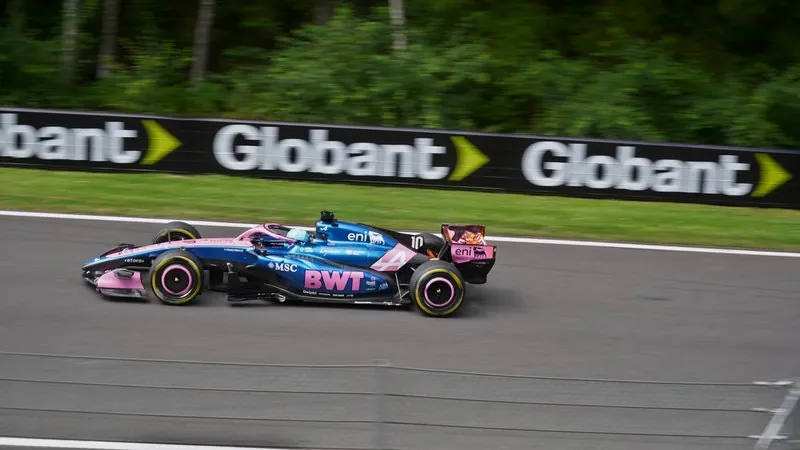
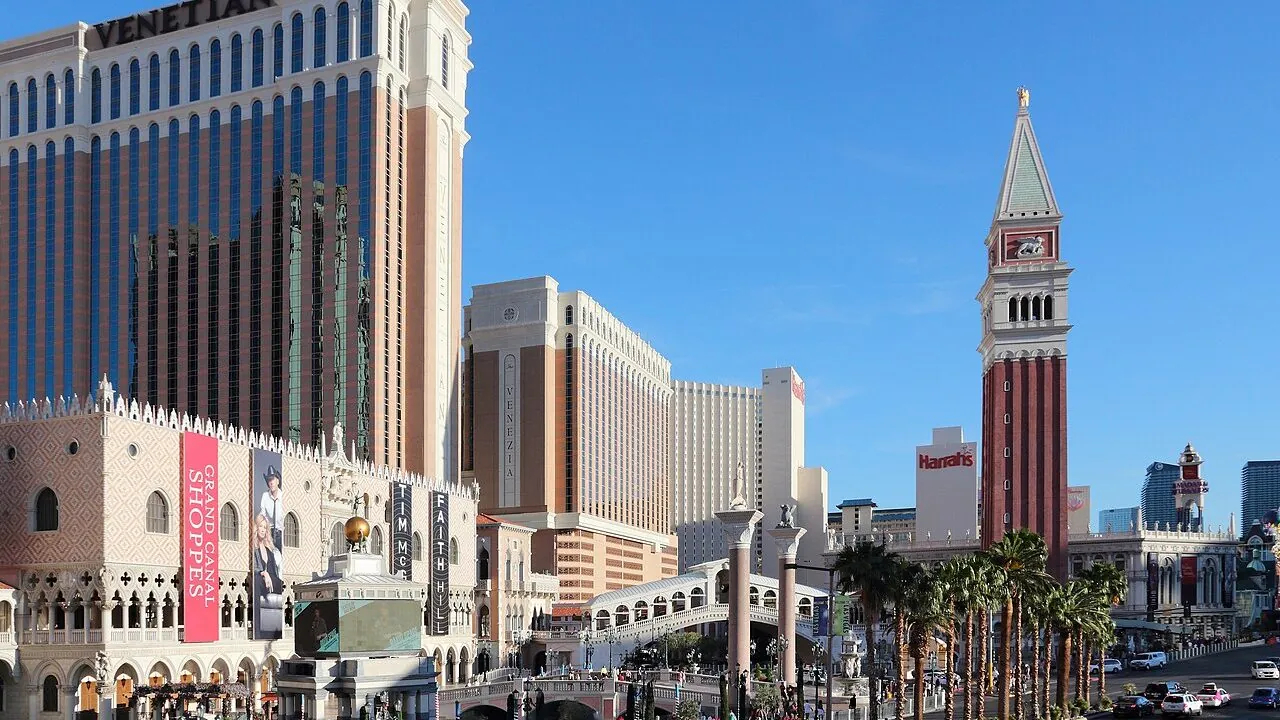
Behind them came the result that mattered most to one address on the Strip. Pierre Gasly finished fifth and Franco Colapinto sixth, a solid points haul for BWT Alpine Formula One Team. Alpine's home for the weekend was not the paddock. For the fourth consecutive year, the team's official home base in Las Vegas was The Venetian Resort, the property that stands at Turn 12 of the circuit.
The second contest, trackside
Las Vegas has turned Grand Prix weekend into a hospitality contest run in parallel with the race, and The Venetian has positioned itself at the centre of it. In May 2026 the resort announced a five year extension of its Founding Partner agreement with the Las Vegas Grand Prix, running through 2030, alongside the return of Alpine as its resident team. Its invite only Velocity Club sits above the resort's outdoor canal and overlooks the exit of Turn 12, close enough that guests watch the cars accelerate away toward the Strip.
The Velocity Club's nightly culinary programme was drawn from the resort's restaurant portfolio, with Wolfgang Puck, Thomas Keller, Tetsuya Wakuda, Simon Kim and Jose Andres among the chefs expected to appear and participate across the weekend. That is the arms race in miniature. Every major property on the Strip can sell a view of the race. Fewer can put a chef of Keller's standing in the room above the corner, cooking for the guests who hold the invitations.
What Keller was doing there
Keller is the chef of The French Laundry in Yountville, in California's Napa Valley, and his presence in Las Vegas was part of the programme rather than a celebrity walk through. In a reel published by The Venetian's own Instagram account during race weekend, Keller appears in his chef's coat at the resort, greeting guests and handling caviar, and talks about the parallels between Formula 1 and culinary excellence. In his telling, the two crafts rest on the same foundations: commitment, dedication to the work, and having the best equipment available to the people doing it.
The comparison is easy to make and harder to earn, which is why it lands. A Grand Prix team and a great kitchen are both exercises in preparation made visible for a short, unforgiving window. The race is 50 laps. A service is a few hours. In both cases the outcome is decided by hundreds of rehearsed decisions executed under pressure, by people whose mistakes are public and immediate. Keller, whose career has been built on exactly that discipline, did not need the analogy explained to him. He was, in effect, describing his own working method with racing cars in place of saucepans.
Why it matters to the race
None of this changes the result, and it is not meant to. Verstappen's win, Antonelli's late fade and Alpine's double points finish are the sporting record of the weekend, and they stand on their own. But Las Vegas is the one Grand Prix where the event around the race is a genuine part of the product the sport is selling, and the resorts understand the assignment precisely. The Venetian did not simply sponsor a corner. It housed a Formula 1 team for a fourth year, renewed its founding partnership for five more, and staffed its trackside club with some of the most decorated chefs working in America.
The team it housed went home with fifth and sixth places and a useful haul of points. The chef it hosted went home to Yountville. And the race itself, 35 lead changes deep, made the case that in Las Vegas the competition now runs on both sides of the fence, at full speed, all weekend.