Formula 1's 2026 Reset: The Engineering Behind the New Era
A near-even split between combustion and electric power, active aerodynamics, smaller cars and a new Manual Override: the biggest rules change in a generation has reshaped what a Formula 1 car is. Nine months in, the engineering story is clearer than the championship one.
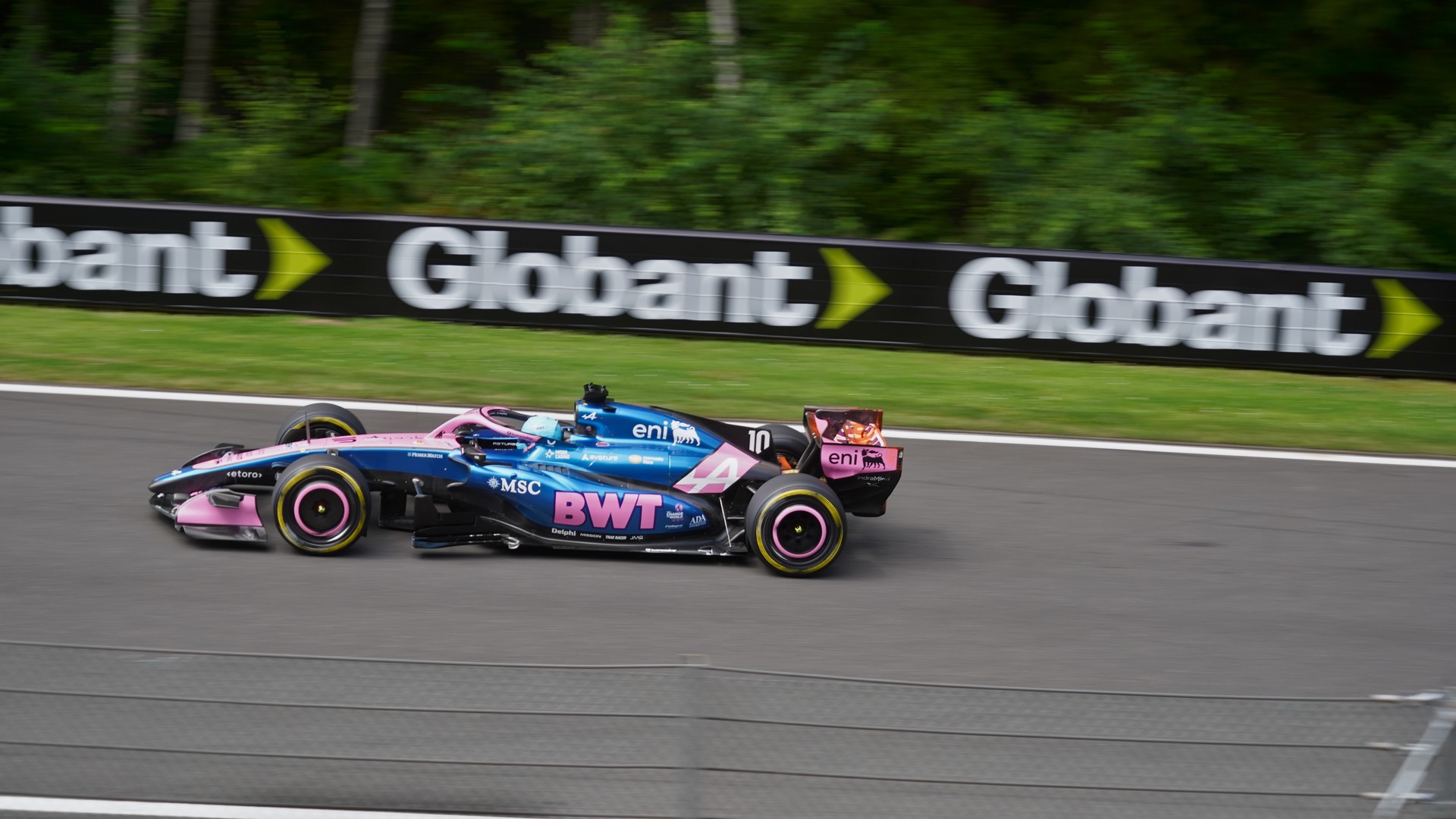
Formula 1 changes its rules in cycles, but 2026 is different in kind. Both the power unit and the chassis regulations were rewritten at once, the grid expanded to eleven teams, and the sport's fundamental energy equation was inverted. The internal combustion engine, which once provided around 80 percent of a car's power, now supplies roughly half. This is the deepest technical reset in a generation, and its consequences are still unfolding.
The 2026 regulations have made energy the currency of Formula 1, and the teams that master the electrical half of the equation are the teams at the front.
The power unit: half electric
The 2026 power unit regulations, approved by the FIA World Motor Sport Council in August 2022, target approximately a 50/50 split between combustion and electric power. The combustion element drops from 550-560 kW to 400 kW, while the MGU-K rises from 120 kW to 350 kW, an almost threefold increase in electric power. Total system output remains around 1,000 hp, in the FIA's words delivering even more power than the previous units.
Three changes define the formula. The MGU-H, the heat-recovery unit that made the previous hybrids so complex and so expensive, is gone entirely. Energy recovered under braking doubles to 8.5 MJ per lap. And the fuel is 100 percent advanced sustainable fuel, sourced from carbon capture, municipal waste and non-food biomass, trialled in Formula 2 and Formula 3 in 2025, as part of the sport's net-zero-by-2030 target.
The engineering consequence is a car whose performance is governed as much by energy management as by aerodynamics. With so much of each lap's pace dependent on deploying a finite electrical budget, drivers and strategists must decide where to spend energy, and the racing becomes, in part, a contest of electrical efficiency. Pre-season testing reports described a two-tier grid defined by energy management, and the season has borne that out.
The chassis: active aero and smaller cars
The aerodynamic regulations, revealed by the FIA in June 2024, replace DRS with movable front and rear wings. The two configurations were originally termed X-mode (low drag, for straights) and Z-mode (high downforce, for corners); in December 2025 the FIA and Formula 1 renamed them Straight Mode and Corner Mode after fan focus-group testing. The cars are smaller: wheelbase down 200 mm to 3,400 mm, width down 100 mm to 1,900 mm, floor width cut by 150 mm. Minimum weight is 768 kg in the ratified regulations (later Formula 1 materials cite 770 kg), 30 kg below the previous generation.
The ground-effect tunnels that defined the 2022-2025 cars are gone, replaced by a partially flat floor with a lower-powered diffuser. Downforce targets fell by roughly 15-30 percent and drag by up to 40 percent in the updated figures. The front wing is narrower with a two-element flap; the rear wing has three elements with the beam wing removed. Tyres stay at 18 inches but get narrower, saving roughly 5 kg per set. The stated aim is a nimbler car that can follow more closely, with less dirty air and more emphasis on the driver.
Manual Override: the new overtaking aid
DRS's replacement is the Manual Override mode. The leading car's electrical deployment tapers off above 290 kph, reaching zero at 355 kph; a following car within one second gets MGUK Override, delivering 350 kW up to 337 kph plus 0.5 MJ of extra energy, usable all at once or spread across a lap. It is a subtler tool than DRS: instead of a drag-reduction flap, the advantage comes from electrical energy the leader cannot access. Early-season analysis suggests it rewards planning over opportunism, since the extra energy must be harvested before it can be spent.
The new grid
Eleven teams contest the season. Audi arrived as a full works team via its Sauber takeover, the rebrand effective 1 January 2026, building its own power unit. Cadillac joined as the first new team in a decade, run by General Motors and TWG Global, starting on customer Ferrari power units before GM's own unit arrives later in the cycle, with Sergio Pérez and Valtteri Bottas driving. Ford returned in partnership with Red Bull Powertrains, supplying Red Bull Racing and Racing Bulls. Honda came back as a full works manufacturer with Aston Martin, which left Mercedes power. Renault exited as an engine supplier after 36 years, and Alpine switched to customer Mercedes units. Toyota holds a technical partnership with Haas.
Nine months in: what the season has shown
The competitive picture, as of mid-season reporting, is led by Mercedes power. Motorsport.com Spain reported in late 2025 that Mercedes was unanimously believed in the paddock to have the best 2026 power unit; after the February shakedown, Mercedes topped the times and completed the highest mileage. By August 2026, Fox Sports Australia's mid-season report had Mercedes leading both championships with 379 constructor points, eight wins and ten poles, and Andrea Kimi Antonelli leading the drivers' standings.
Ferrari, per The Race's early-season analysis, was judged by some rivals to have the best cornering car but a power deficit, a rumoured 20 bhp shortfall on the V6. Lewis Hamilton said in China that the team was "hugely down to the Mercedes engine" on performance. Aston Martin and Honda have been the disappointment: delayed engine programme, severe reliability problems including vibrations described as a safety risk, no finisher until the third round in Japan, and an upgrade package that only arrived mid-season. Audi scored its first points in the Melbourne opener, added more through July, and sits in the lower midfield; Cadillac, reliable in testing, was yet to score by the break. The FIA also built in a convergence mechanism: if a power unit is judged at least 2 percent down after the Miami checkpoint, an additional development opportunity can be triggered, a rule Ferrari's Fred Vasseur publicly welcomed.
These are snapshots, not conclusions, and the championship picture beyond the summer break remains unverified at the time of writing. But the engineering verdict is already in. The 2026 regulations have made energy the currency of Formula 1, and the teams that master the electrical half of the equation are the teams at the front. The combustion engine is not diminished in this formula. It is, for the first time, an equal partner.