Audi's First Season: The R26 and the Long Game
Nine months into Audi's first campaign as a full works Formula 1 team, the R26 has gone from Barcelona shakedown to points finishes. The target, a championship by 2030, has not moved.
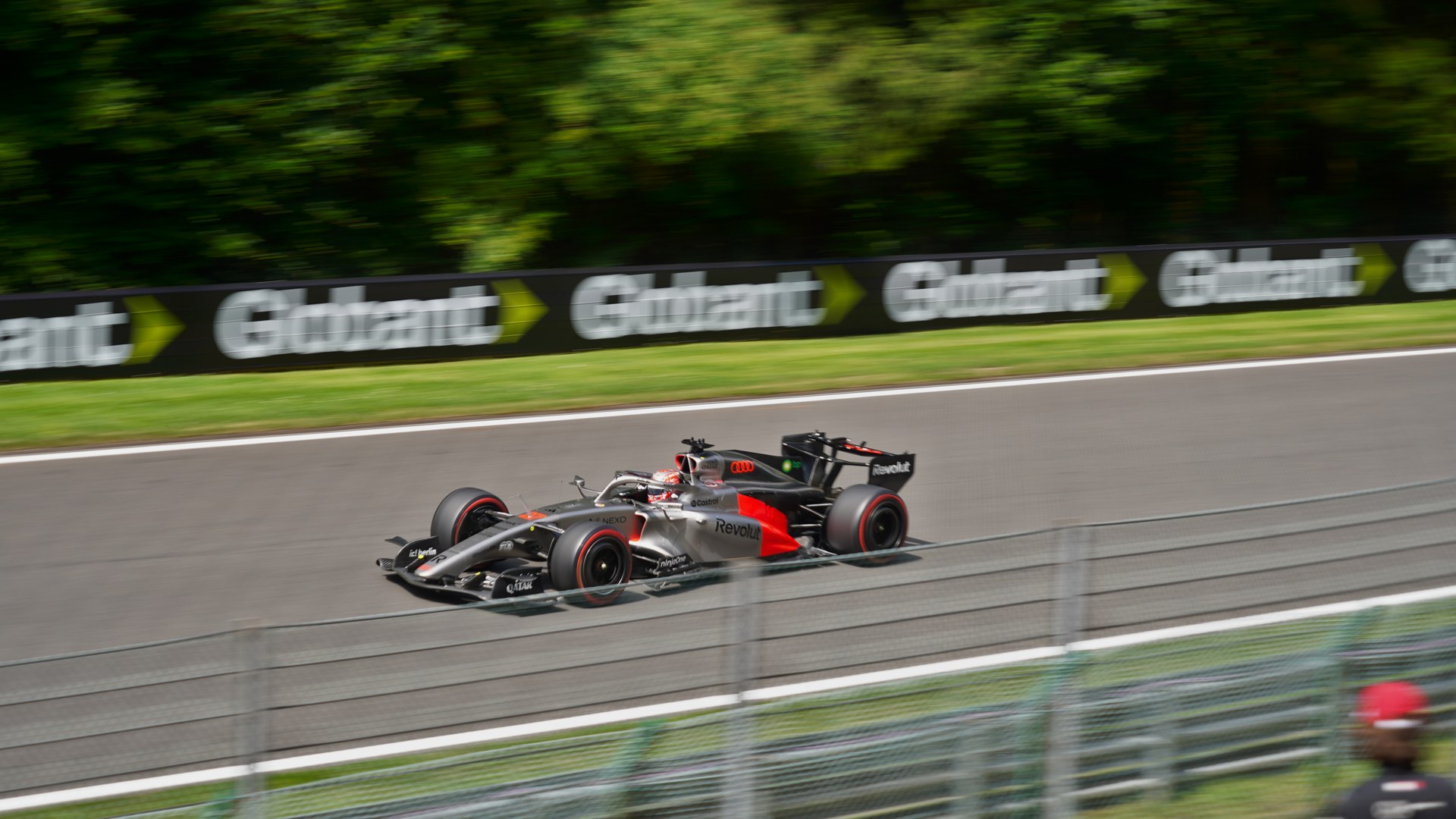
Audi's arrival in Formula 1 has been a decade in the making and, by the standards of the sport, remarkably methodical. The German manufacturer fully acquired the Sauber team, kept its Hinwil base in Switzerland, opened an R and D centre in Bicester in England's Motorsport Valley, and built its own power unit for the 2026 regulation reset. The car is the R26. The drivers are Nico Hulkenberg and Gabriel Bortoleto. The team principal is Jonathan Wheatley, with Mattia Binotto heading the Audi F1 project. On 9 January 2026, the R26 became the first 2026 car to turn a wheel, at a filming day in Barcelona.
The R26 will not win the 2026 championship. It was never meant to.
The season so far
The 2026 regulations, active aerodynamics on the chassis and a much greater emphasis on electric power in the engines, were designed to shuffle the order, and new power unit manufacturers were always going to face the steepest climb. Audi's year has been one of steady accumulation rather than breakthrough. After 14 rounds the R26 has scored 17 points, eighth in the constructors' standings and four adrift of Haas, with Hülkenberg's tenth place at the Spanish Grand Prix at Madrid's Madring among a handful of points finishes. The car's first season has been about learning the new formula in public.
The structure behind the car
What distinguishes Audi's entry is how completely it owns the project. Chassis from Hinwil, power unit developed in-house, a driver pairing that combines Hulkenberg's experience with Bortoleto's youth, and leadership drawn from championship-winning operations. Audi CEO Gernot Dollner framed the ambition at the Berlin launch: not merely to compete, but to be fighting for the World Championship by 2030. Binotto has described a three-phase approach, from challenger to competitor to champion.
The analysis: patience as strategy
Formula 1 punishes impatience, and new manufacturers usually pay tuition in public. Audi's methodical build, owning the team outright rather than arriving as a badge, suggests the tuition is budgeted. The R26 will not win the 2026 championship. It was never meant to. The question is whether the foundations laid in this first season, the power unit, the people, the processes, compound into something formidable by the end of the decade. On the evidence of the build-up, Audi is playing the only game that matters: the long one.