The $747.9 Million Week: What Monterey 2026 Really Said About the Collector Market
Record totals, a new benchmark for American cars, and a charity Ferrari that drew $40 million. A sober look at which numbers deserve the word record, and which merely got loud.
Monterey Car Week took place August 7 to 16, and the auctions did something no one in the business had planned for. According to data compiled by Hagerty and published by Gooding Christie's, the week's sales totaled $747.9 million through Saturday, against $432.8 million for the same period in 2025. That is a 73 percent increase, well past Hagerty's own pre-sale forecast of $470 to $500 million, and comfortably clear of the previous all-week record of $471 million set in 2022.
The market did not broaden. It deepened, violently, at the top.
Before the champagne, a word about what those numbers are. Hagerty's figures are reported totals through Saturday night, which is the industry convention for the week. The total number of lots actually moved very little: 844 of 1,124 sold, a 75 percent sell-through, against 818 of 1,078 in 2025. What moved was price. The average sale climbed from $529,034 to $866,107, a 64 percent jump. In other words, the market did not broaden. It deepened, violently, at the top.
The record that matters
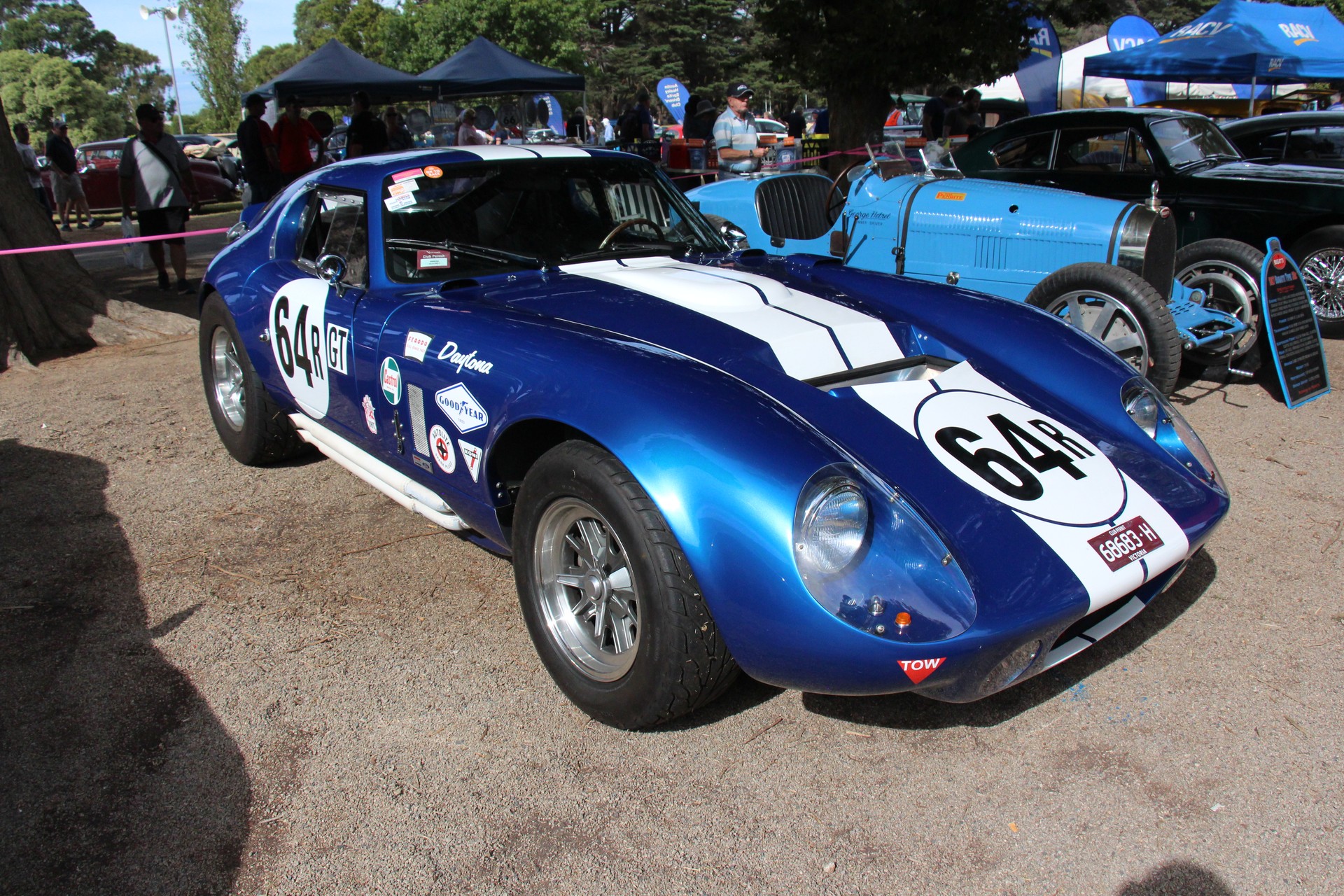
The defining sale of the week was the 1964 Shelby Cobra Daytona Coupe, chassis CSX2300, at Gooding Christie's Pebble Beach Auctions on August 14. The estimate was set at more than $25 million. When bidding opened, the room went silent, and the bidding was serious from the first raise. Hagerty's on-site account reports that one bidder put down $28 million, stood up, and left the room rather than bid against himself. Two telephone bidders took it from there. Auctioneer Charlie Ross's gavel fell at $39 million. With buyer's premium, the reported total was $42,905,000.
That makes CSX2300 the most expensive American automobile ever sold at auction, nearly doubling the previous record of $22 million set in 2018, when Gooding sold Gary Cooper's 1935 Duesenberg SSJ. For context on how far the model has traveled, the last time any Cobra Daytona was offered publicly was Mecum's Monterey sale in 2009, when CSX2601 sold for $7,685,000.
The car's credentials are beyond dispute. It is the first of just six Daytona Coupes built, the machine Carroll Shelby created to answer the Ferrari 250 GTO in the FIA GT Championship. It debuted at the 1964 Tour de France Automobile with Bob Bondurant and Jochen Neerpasch, raced at Daytona, Sebring, the Nürburgring 1000 Kilometers and Reims, and helped Shelby American secure the 1965 FIA World Manufacturers' Championship. Later it raced in Japan, was purchased by Carroll Shelby himself in 1975, stayed in his possession until 1998, and then passed through several owners, most recently Larry Bowman, who held it for more than two decades. It has been restored to 1965 specification and was still being exercised at the Goodwood Festival of Speed in July 2026.
The charity lot and the rest of the top ten
RM Sotheby's Monterey sale, held over three evenings at the Monterey Conference Center, tallied $370.3 million in Hagerty's through-Saturday count from 168 of 194 lots, an 87 percent sell-through; the house's own final figure was $380 million, roughly 90 percent sold. Its top reported result was a genuine outlier: the one-off 2026 Ferrari Luce Tailor Made sedan, sold for $40,000,000 as a charity lot with proceeds to the Ferrari Foundation. Because it is a charity result for a one-off car, it belongs in a category of its own rather than in any price guide.
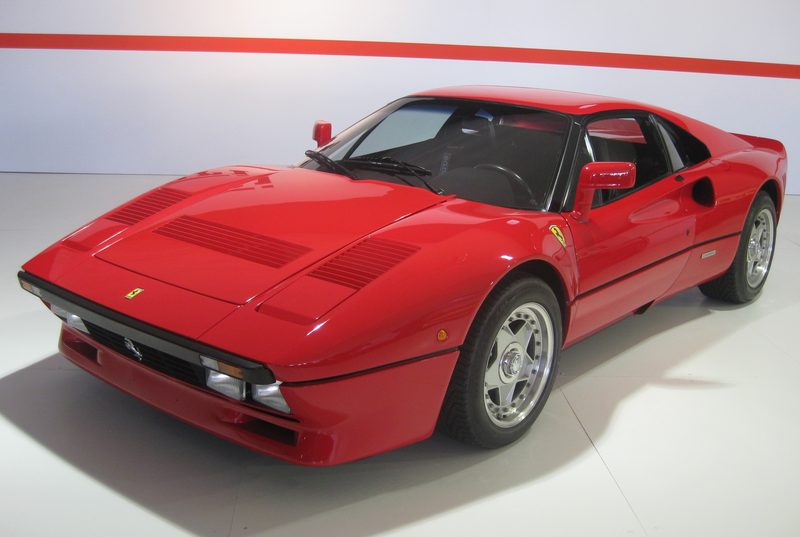
Behind it came the market's real signals. A 1996 McLaren F1 GTR sold for $34,655,000. A 1963 Chevrolet Corvette Grand Sport, chassis 003, lot 341, made $18,705,000, a genuine shock even by Corvette standards. A 2023 Ferrari Daytona SP3 brought $17,825,000, a 1995 Ferrari F50 $12,105,000, a 1985 Ferrari 288 GTO $11,555,000, and a 2003 Ferrari Enzo $9,410,000. A 1935 Duesenberg Model JN Convertible Coupe by Rollston, another ex-Clark Gable car, made $9,080,000. All are RM Sotheby's officially reported post-sale figures, which the house's coverage notes include buyer's premium.
Gooding Christie's week tallied $158.0 million in Hagerty's through-Saturday count from 155 of 167 lots, a 93 percent sell-through; the house's own final, after post-sale deals, was over $159 million, 158 lots sold and 94 percent sell-through. Behind the Daytona came a 1963 Ferrari 250 P Spider at $18,705,000, a 1961 Ferrari 250 GT SWB Alloy coupe at $8,090,000, a 1952 Ferrari 225 S Spider at $4,295,000, and a 1959 Maserati Tipo 61 at $4,240,000. Broad Arrow's Monterey sale contributed a 2025 Bugatti Mistral at $8,805,000, consistent with an $8,310,000 result for another Mistral from the Driver's Philosophy Collection at RM Sotheby's.
Reading the market without the hype
Three observations are worth making, because the headlines will not make them.
First, this was a sale of exceptional individual cars, not a rising tide. Hagerty's own market analysts noted that while the great cars drew record bids, ordinary examples from the 1950s and 1960s frequently sold for less than condition-appropriate money. Modern limited-production cars from the 1990s onward accounted for more than half of all sales. The Daytona Coupe result is best understood as the market's verdict on one car with unrepeatable provenance, not on American classics in general.
Second, the estimate-to-hammer gap on the Daytona matters. An estimate above $25 million, a hammer of $39 million, and a reported $42,905,000 all-in total are three different numbers describing the same sale. The all-in figure is the one the market will quote, and it is the one that includes the buyer's premium. Anyone comparing future results to this one needs to compare like with like.
Third, none of this tells you what your car is worth, and nothing in this market should be read as a promise. Auction results are the most transparent data the collector market produces, which is why we report them with this much care. They are also snapshots of rooms full of specific bidders on specific nights. The 2026 Monterey sales prove that when a car is genuinely significant, the market is deeper than anyone predicted. They do not prove that depth extends to everything else on the lawn.