Thirty-Four Million Euros in Belgium: What the Zoute Results Actually Say
Broad Arrow's second Zoute Concours Auction totalled 34.6 million euros with a 91 percent sell-through rate, the highest grossing collector car auction in Belgian history. The Holy Trinity cleared ten million euros between three cars, but the most instructive result wore a BMW badge and a Volkswagen engine.
On Friday 9 October 2026, in a marquee at Approach Golf in Knokke-Heist, Broad Arrow held its second Zoute Concours Auction and produced the largest collector car auction result in Belgian history: total sales of 34.6 million euros and a sell-through rate of 91 percent across more than 90 lots. Registered bidders rose by more than 44 percent on the inaugural 2025 sale, over a third of them bidding with the house for the first time, and they came from 33 countries. A note on method before the numbers: Broad Arrow publishes its results as single sold figures and does not split hammer price from buyer's premium in its release, so the figures below are the house's published prices, reported as published, with estimates identified as estimates where they were known in advance.
The market ranks the Trinity exactly as it ranks their scarcity and mythology, and the gaps are now measured in millions rather than in tenths of a second.
The Trinity, priced as a set
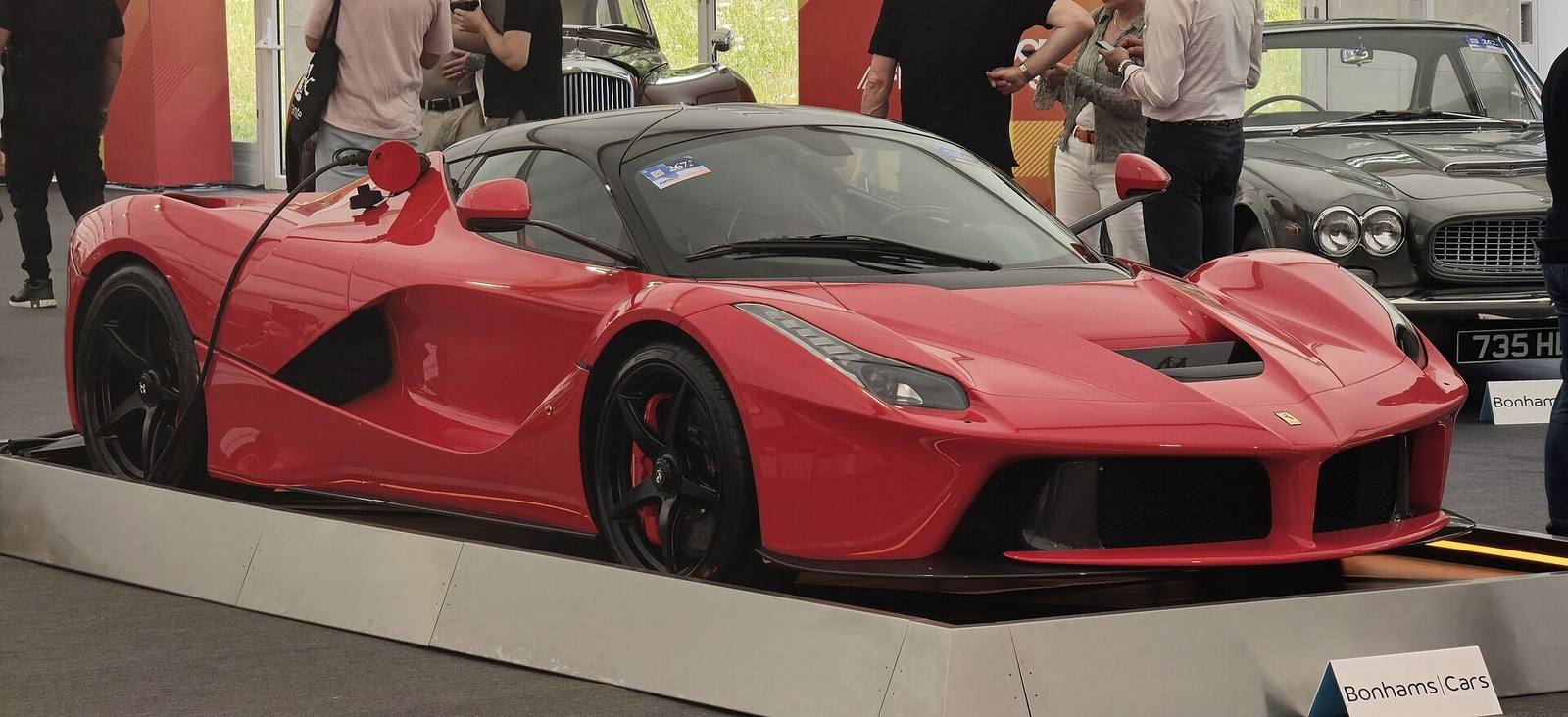
ROAD & MOTOR previewed this sale as a cohort test: the three hybrid hypercars of the 2010s, the Ferrari LaFerrari, McLaren P1 and Porsche 918 Spyder, offered in one room on one evening. The room answered clearly. The 2015 LaFerrari in Grigio Ferro Metallizzato, the final lot of the sale, sold for 5,181,250 euros, above the top of its 4.0 to 5.0 million euro pre-sale estimate and, according to Broad Arrow, a record for a collector car sold at auction in Belgium. The 2015 Porsche 918 Spyder with the Weissach package, finished in paint-to-sample Sport Classic Grey over Espresso leather, made 3,212,500 euros. The 2015 McLaren P1, showing a few hundred kilometres from new, made 1,890,625 euros, above its 1.4 to 1.8 million euro estimate. Between them the three cars accounted for 10,284,375 euros, very nearly thirty percent of the entire sale.
The ordering inside the trio is the finding. A decade after production ended, the market ranks the three cars exactly as it ranks their scarcity and their mythology: the LaFerrari at the top by a wide margin, the 918 second, the P1 third, and the gaps between them are now measured in millions rather than in tenths of a second. The cohort trades as a set, but it does not trade as equals.
Provenance did the heavy lifting
The most instructive result of the night was not the most expensive. A 2000 BMW M5, an E39, sold for 411,250 euros. The car matters because of what is under its bonnet: a Volkswagen W10 engine installed at the direction of Dr Ferdinand Piech, who used the car personally while the engine was in development. Broad Arrow records that only three prototype W10 engines were built, that this is the only car in which one was installed, and that the W10 formed the basis of the Bugatti W16. The price set a world record for an E39 BMW and made it, in the house's words, the most valuable non-charity M5 ever sold at auction. No specification sheet explains that number. Provenance does, entirely.
The same pattern repeated at lower altitudes. A 1987 Aston Martin V8 Vantage X-Pack sold for 647,500 euros, through its upper estimate and a record for a V8 Vantage coupe at auction. A 2016 Porsche 911 R made 540,625 euros, also beyond its upper estimate. A 2000 BMW Z8 formerly owned by Pete Sampras, the seven-time Wimbledon champion, sold for 287,500 euros, inside its 250,000 to 350,000 euro estimate. A 1951 Cadillac Series 62 convertible that once belonged to King Baudouin of Belgium made 44,850 euros. Even the automobilia obeyed the rule: an original 2002 Toyota Formula One engine, ex-Allan McNish, far exceeded its upper estimate at 50,000 euros.
A young sale with a modern centre of gravity
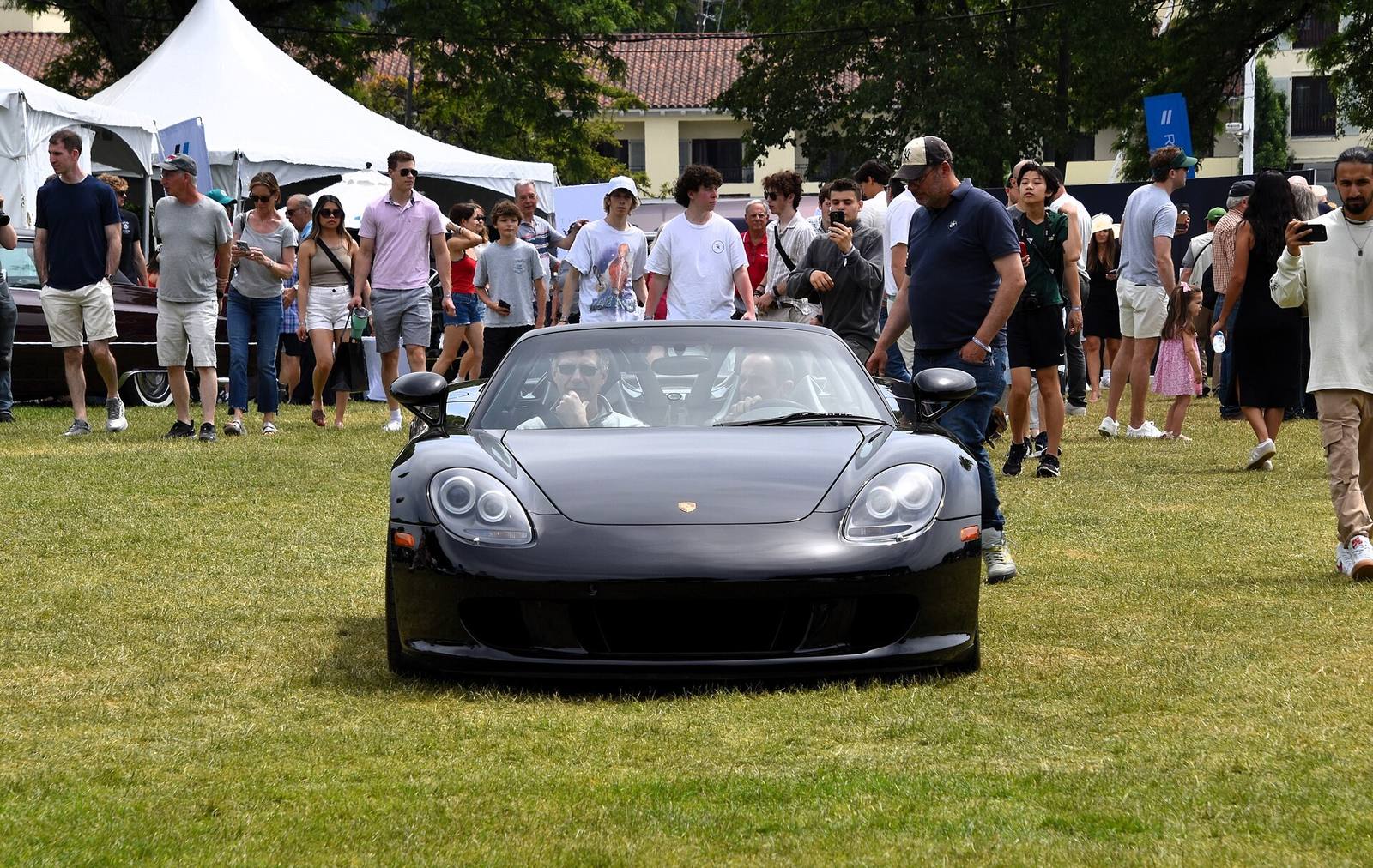
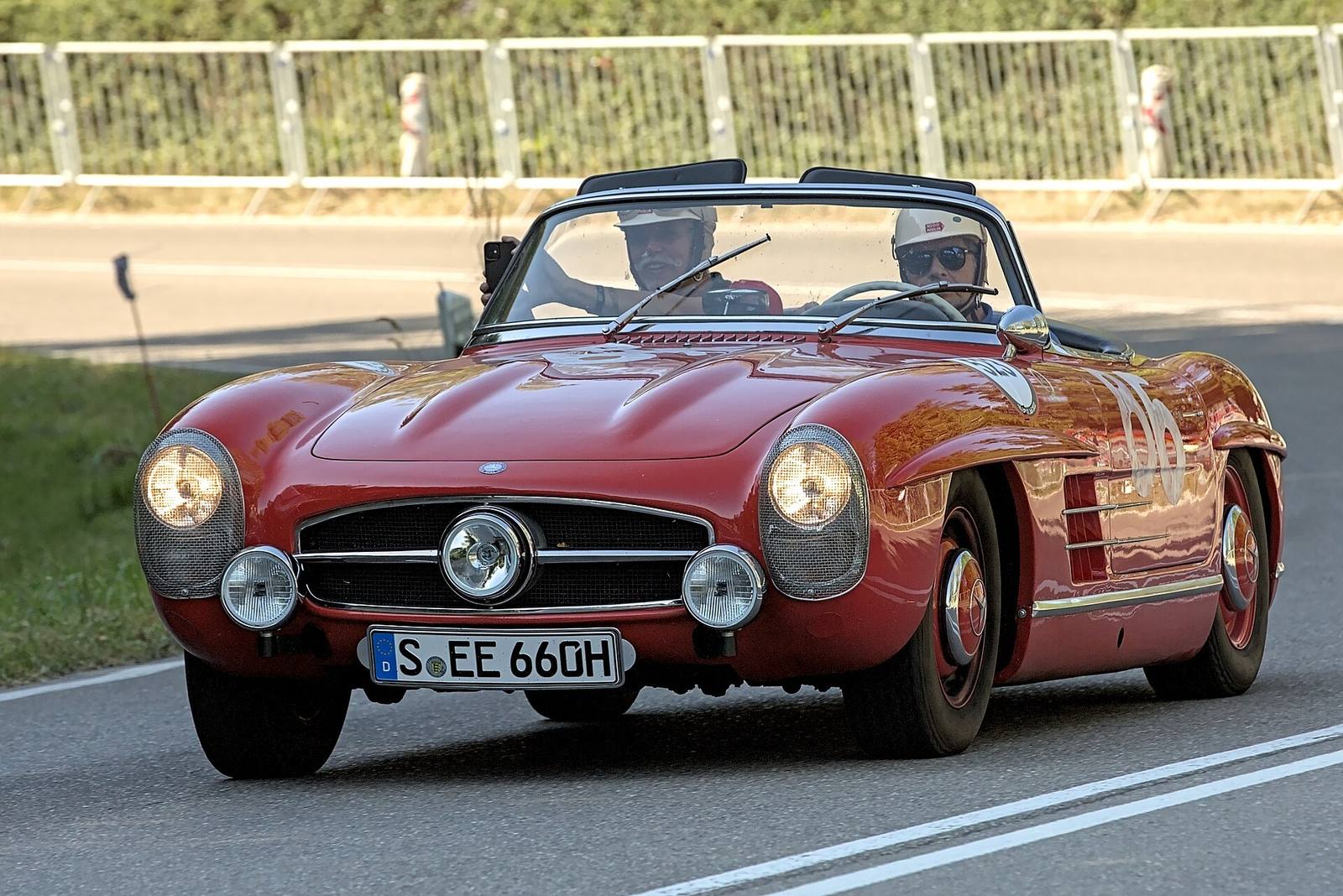
Read the top ten as a document and the sale's character is plain. Behind the Trinity came the Carrera GT at 2,762,500 euros, a 2022 Ferrari 812 Competizione at 1,496,875 euros, a 2010 Ferrari 599 GTO and the Kimera EVO37 restomod at 1,131,250 euros each, a 1964 Ferrari 250 GT Berlinetta Lusso at 1,075,000 euros, a 1957 Mercedes-Benz 300 SL Roadster at 1,041,250 euros and a 2020 Ferrari 488 Pista Piloti Ferrari at 838,750 euros. Only three of the ten carry a date from before 2000, and one of them, the Kimera, is a modern restomod that Broad Arrow catalogues under a 1976 identity; the genuine period pieces in the top ten are the Lusso and the 300 SL. The 1990 Monte Carlo Automobile Centenaire, the second of 16 built in collaboration with Lamborghini and described as the first road car with a carbon fibre monocoque, found a buyer at 821,875 euros. A 1992 Jaguar XJ220 achieved 512,500 euros and a 1992 Lamborghini Diablo 343,750 euros, the Diablo far beyond its upper estimate.
The analysis is that Zoute has found the formula Monterey and Paris already know: attach a serious auction to a concours weekend, curate for provenance rather than for volume, and let the modern era carry the top of the catalogue while the classics provide the ballast. A 91 percent sell-through rate in a second-year sale, with a third of bidders new to the house, suggests the formula travels. Broad Arrow's European calendar now moves to Zurich on 7 November. On this evidence, it travels with momentum.