Restored Twice, Correct Once: The Duesenberg SSJ's Long Road Back to Black Lacquer
Harry Yeaggy's Pebble Beach-winning 1935 Duesenberg SSJ was stripped to a bare chassis and rebuilt around fragments of original paint. Inside the forensic approach to restoration.
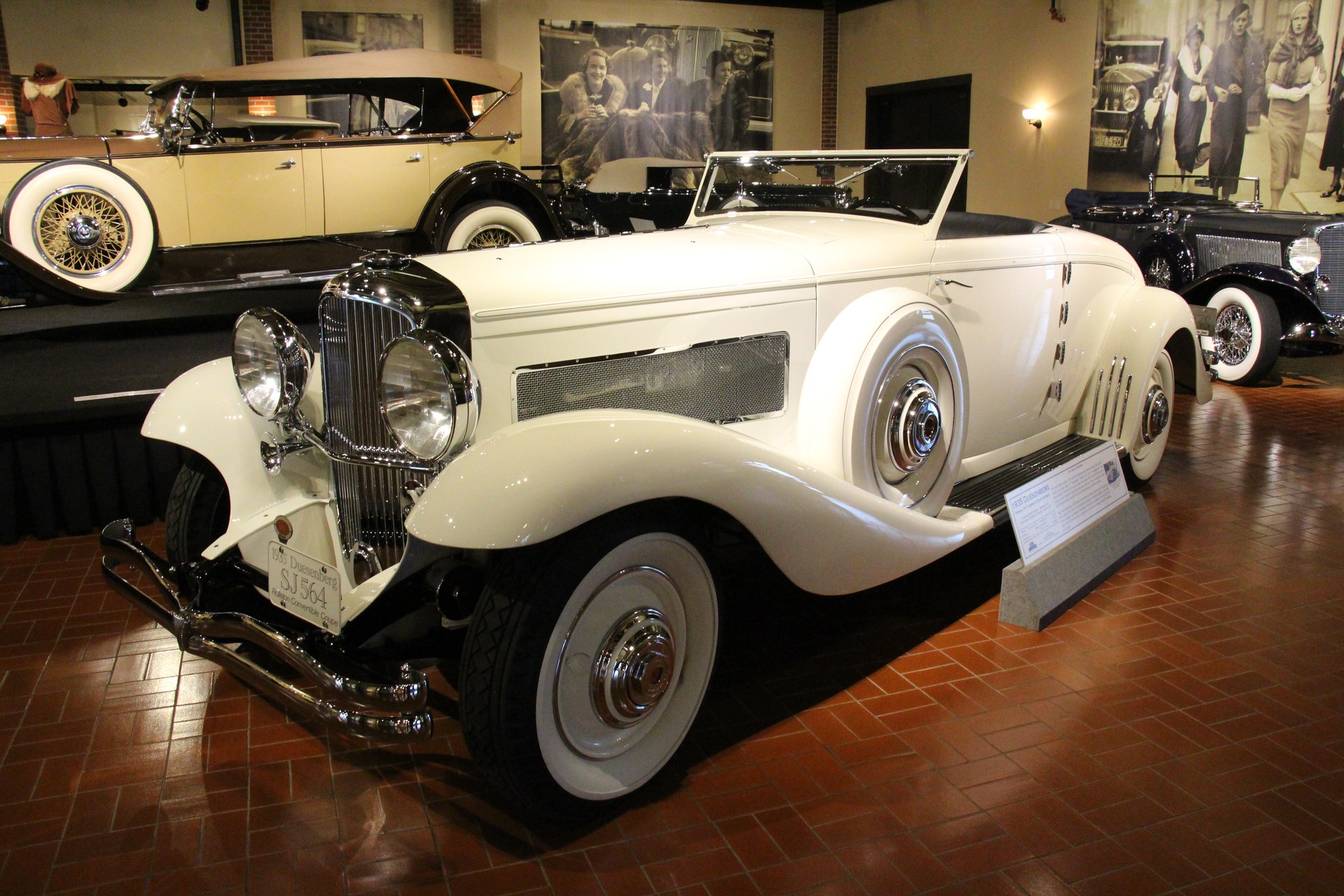
The most discussed restoration of 2026 is not a car anyone had to search for. It was one of two Duesenberg SSJ Special Speedsters ever built, the supercharged, short-chassis expression of the Model J, and the car Duesenberg loaned to Clark Gable in the 1930s. Its sibling went to Gary Cooper. For more than six decades it was owned by the Ferrara family. Around 2023 it passed to Cincinnati collector Harry Yeaggy, who had, by one published account, pursued the car for decades.
A serious restoration is as much about knowing what to leave alone as what to redo.
When it arrived at Pebble Beach on August 16, it wore its original presentation: black lacquer over light saddle leather. The judges named it Best of Show. The story of how it got there is a case study in the difference between restoring a car and reconstructing what the car actually was.
The first restoration was not the problem. The wrong one was.
According to the restorer, the SSJ had been restored in 2023, but not to its correct form. Chris Charlton, owner of Classic Restoration Services, told the story plainly: the team took the car back down to the bare chassis and started over. It is an unusual decision at this level, because it means discarding someone else's recent, expensive work in order to spend more. The justification was evidence.
"We found about a two-inch section of the original paint at a spot where the body attaches to the firewall," Charlton said. Two inches is not much paint. It is, however, the only unarguable witness to what the factory actually applied. The leather told a similar story. The car had been reupholstered twice, and the team found a fragment of the earlier material as well. Both original finishes, the black lacquer and the light saddle hide, were then recreated from these remnants rather than from photographs, memory, or the previous restoration's interpretation.
The engine required no such detective work. It had been rebuilt by Straight Eight, the Duesenberg specialists in Troy, Michigan, and Charlton's team judged it correct as it stood. That is worth noting: a serious restoration is as much about knowing what to leave alone as what to redo.
What the SSJ actually is
Restorers cannot restore what they do not understand, so it helps to say precisely what an SSJ is. The car rides on a shortened 125-inch wheelbase, roughly thirteen inches cut from the standard Model J chassis. The engine is the Duesenberg straight-eight with a centrifugal supercharger, dual carburetors, dual overhead cams and four valves per cylinder, which the factory rated at close to 400 horsepower. In 1935, when a Ford Model A made about 40, that figure was difficult to comprehend. Only two Special Speedsters were built, with bodywork designed by Herb Newport.
Gable's connection to the winning car was brief, a loan of about six months, and the romantic story of the two Hollywood cars racing in the hills has the quality of legend. The car's standing at Pebble Beach did not rest on Gable. It rested on what the judges could see: a car whose surfaces, fits, and materials had been researched to the level of a two-inch paint fragment and judged faithful to period.
Preservation, restoration, and the line between them
There is a productive tension in the collector world between preservation, keeping a car as it survived, and restoration, returning it to a chosen point in its past. The SSJ project belongs to a third category that is becoming the standard at the top of the concours world: forensic restoration, where the chosen point is verified by physical evidence from the car itself, and everything that cannot be verified is treated with suspicion.
This matters beyond one Duesenberg. The same Monterey week that produced the SSJ's victory saw RM Sotheby's sell the Lost & Found Ferrari Collection, a group of barn-find cars presented with wood scraps, old tires, and, in the house's memorable phrase, one curated raccoon. The crumpled 1954 Ferrari 500 Mondial Series I in that group brought $1,875,000. The market is now rewarding untouched originality at prices that would have been unthinkable twenty years ago, and rewarding documented, evidence-based restoration alongside it. What it is increasingly punishing is the thing in the middle: the well-intentioned restoration that confidently reproduces a past that never existed.
Yeaggy, for his part, had been here before. He won Best of Show in 2007 with the 1935 Duesenberg SJ Speedster known as the Mormon Meteor. "I won once before, 19 years ago, but I appreciate it a lot better now," he said at Pebble Beach. "I appreciate the hard work it took and the time it took to get here." With this win, Duesenberg has eight Best of Show trophies, the most of any American marque. It is a fitting tally for the marque that invented the American supercharged straight-eight, and for a car that had to be taken apart to be put back together correctly.