Eighty-Four Points and a Back-Row Start
Verstappen's first win of 2026 at Sepang stretched Antonelli's lead to 84 points, and Russell starts the Singapore sprint weekend at the back of the grid. The title race is now arithmetic; the interesting questions are about Mercedes' power units and Red Bull Ford's breakthrough.
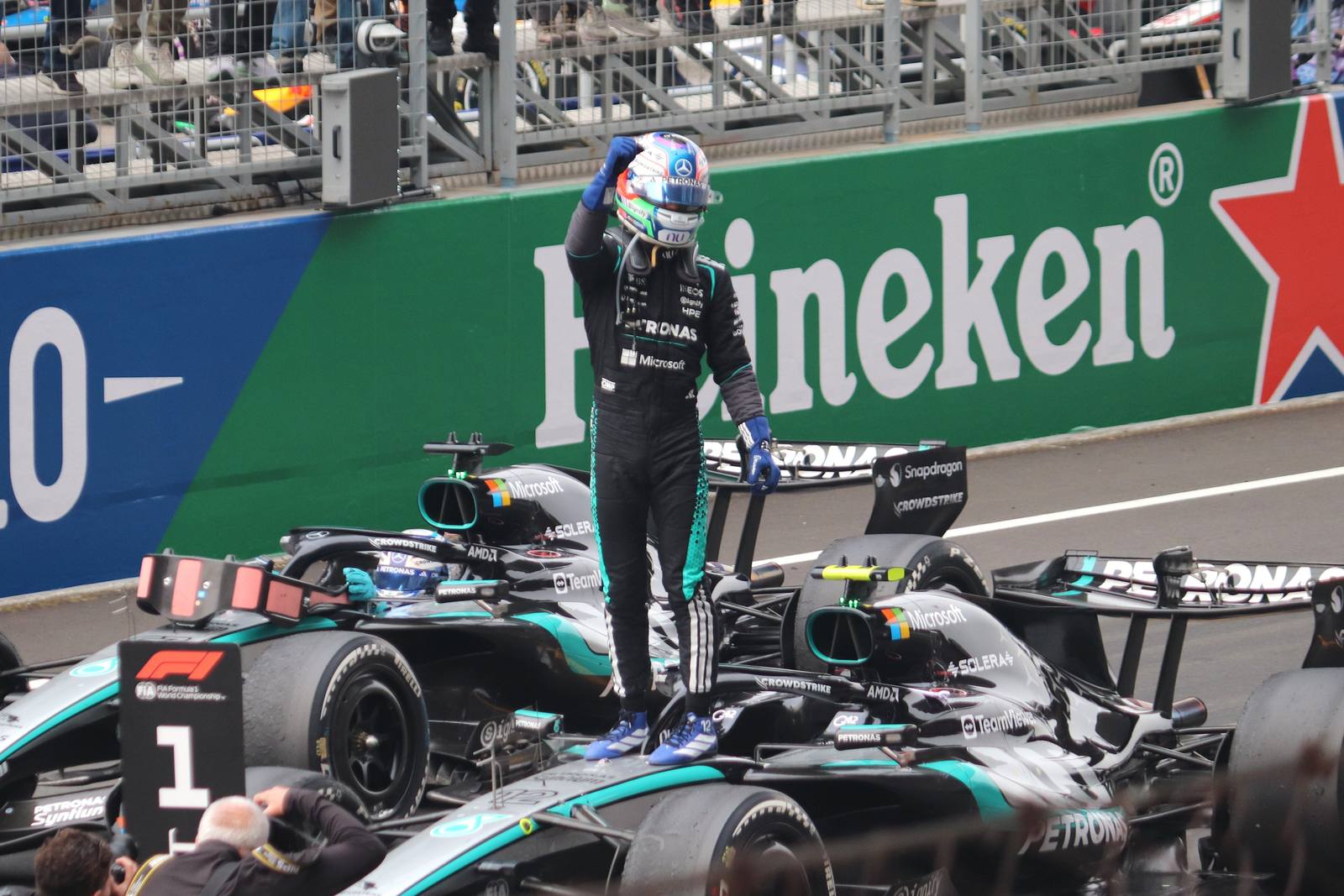
The 2026 Formula 1 season has stopped being a sport and started being arithmetic. At Sepang on 4 October, in a race that kept the Bahrain Grand Prix title while being run in Malaysia, Max Verstappen won from pole: 55 laps in 1:47:14.808, 2.307 seconds clear of Kimi Antonelli. It was his first victory of the year, the first for a Red Bull Ford power unit, and the first Ford-powered win since the 2003 Brazilian Grand Prix. It was his 72nd victory for Red Bull, and it extended a quiet record: he has now won at least once in every season since joining the team in 2016.
Eighty-four points, seven rounds, a back-row start: Antonelli can afford to be careful and Russell cannot afford to be unlucky again.
The race itself was chaos with a results sheet. Rain delayed the start by about 90 minutes, the field got away from a standing start only on lap 3, and safety cars followed for a spun Bottas in the Cadillac and a late Albon in the Williams. Lewis Hamilton took third for Ferrari, his first podium since Silverstone, after a recovery drive from well down the order on a slick-tyre gamble that the conditions eventually rewarded.
The numbers
Antonelli's second place did the real damage. He now leads George Russell by 84 points, 320 to 236, up from 66 before the weekend, with seven rounds remaining. Hamilton's podium moved him to 214; Verstappen's win took him to 188, level with Norris. Mercedes' constructors' advantage over Ferrari stands at 151 points. These are the kind of margins that used to decide championships by October. The season still has Singapore, Austin, Mexico City, Sao Paulo, Las Vegas, Qatar and Abu Dhabi to run, but the direction of travel is no longer in doubt. The only question is the shape of the ending.
The retirement
Russell will not remember Sepang fondly. Running third with five laps to go, his Mercedes lost power and stopped: a power unit failure. The team told Antonelli over the radio that it looked like a PU problem. Russell's own summary, to Sky Sports, was bleakly funny: you have almost got to laugh, he said. I am beyond disappointment. Fifteen points gone in an afternoon, and with them any pretence that this championship is still a contest on pace alone.
Singapore: the arithmetic meets the sprint
Singapore makes it worse before it can get better. Russell will start the weekend at the back of the grid: the new power unit going into his car exceeds the season's four-unit allocation, so the penalty is automatic, and Mercedes has confirmed it. The team will run back-to-back comparisons of its updated car against the previous specification across the weekend, having struggled to extract the expected performance gains from its latest package in Malaysia. Team principal Toto Wolff called Singapore an important test of our understanding and our resilience as a team. It is also the last sprint weekend of the year, which compresses the damage, whatever it proves to be, into fewer sessions.
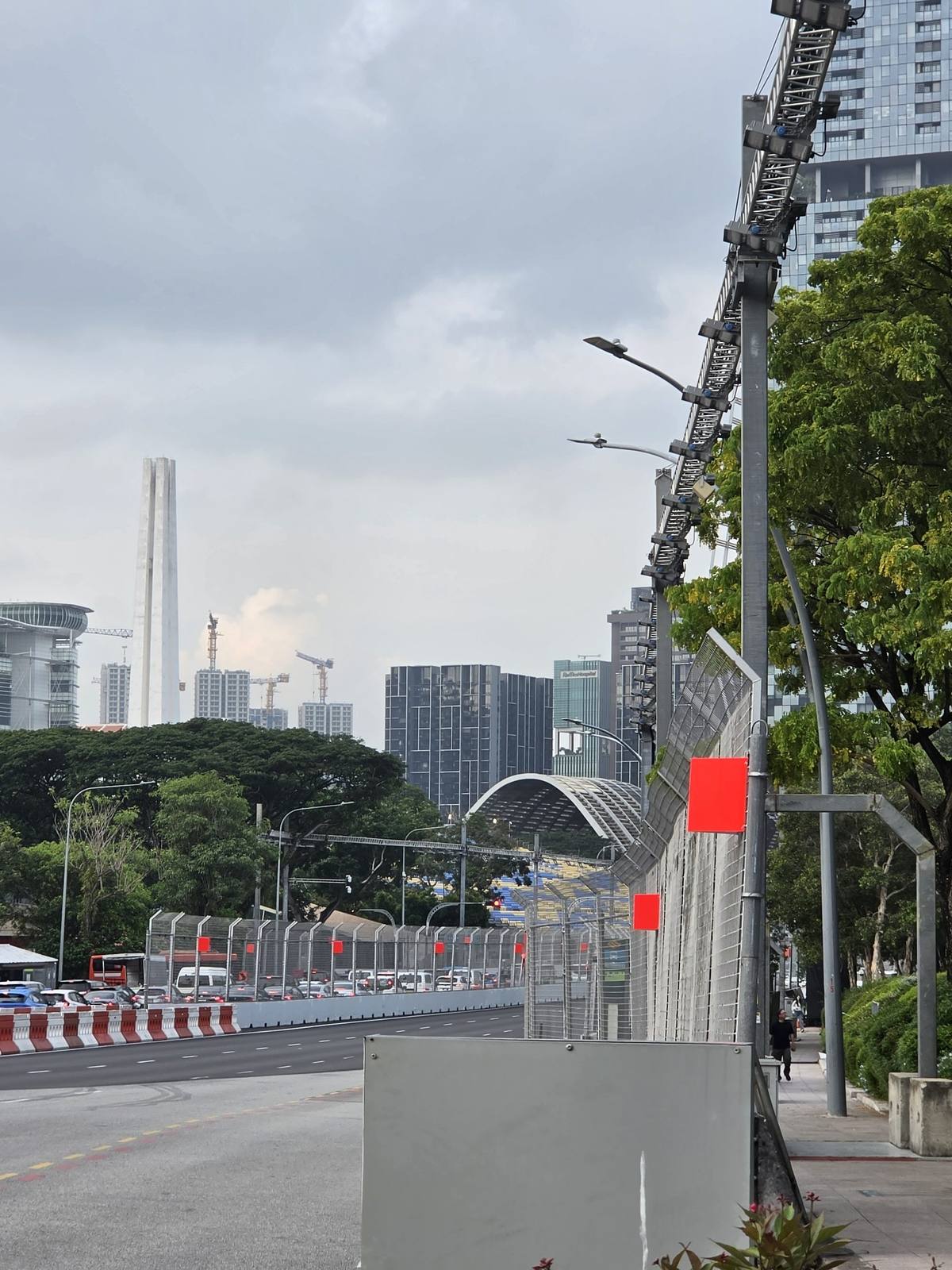
The analysis: what the numbers are really asking
Strip out the drama and Sepang asked two questions. First, whether Mercedes' power unit failures are a 2026 reliability blip or a structural problem. A team leading both championships does not usually spend October explaining mechanical failures, and a back-row start in Singapore turns a reliability question into a championship-management exercise: maximise Antonelli's weekends, minimise Russell's exposure, and hope the failure that struck in Malaysia was the last of its kind. The garage language since has been careful, all investigation and no conclusions, which is what teams say when they do not yet know.
Second, what Verstappen's win says about the pecking order. Red Bull Ford's first victory, on a day the works team faltered, is the first hard evidence that the 2026 regulations have more than one answer. Verstappen called it the first victory for our own engine after a very complicated and tough start to the year, and added that the team had been getting closer and closer, step by step. The subtext is the story: the operation that dominated the last era is learning how to win in this one, and it is learning fast. A breakthrough win in October is worth more than its 25 points; it is a data point the whole paddock will study over the winter.
None of this changes the arithmetic. Eighty-four points, seven rounds, a back-row start: Antonelli can afford to be careful and Russell cannot afford to be unlucky again. But championships are not only won on points. They are won on the weekends when the numbers say one thing and the garage says another. Singapore, under lights, with a sprint attached and a Mercedes starting last, is exactly that kind of weekend.