The A110 Has to Become Electric. Alpine Just Showed Us the Shape of the Answer.
A full-size sculpture unveiled on 28 September previews the third-generation A110, the electric car that must carry Alpine's lightest name. The design keeps the Berlinette's proportions; the Alpine Performance Platform underneath fights the battle that will decide the car's fate: weight.
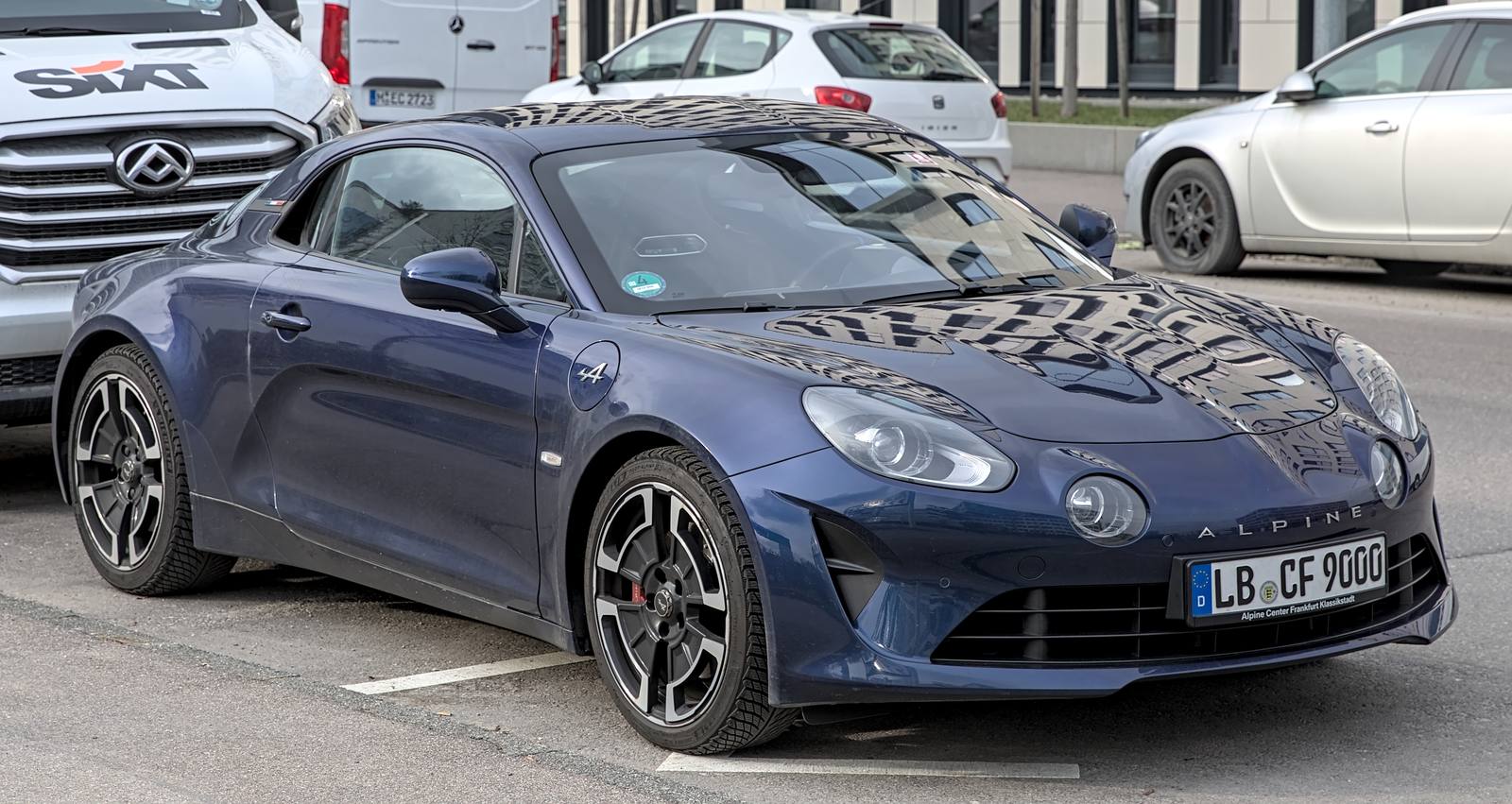
On 28 September 2026, Alpine unveiled a full-size "artistic vision" sculpture previewing the third-generation A110. The piece will be on public display at the Paris Motor Show from 12 October. It is not the car. It is a statement of proportions, rendered as the moment the cover is pulled back, and for a design audience it may be the most revealing Alpine document of the year.
It is a handling-first approach in an industry that usually answers electrification with bigger batteries and headline outputs.
Reading the surface
The sculpture carries the A110's signature cues forward: a low, angular shark's nose, a clear belt line running from nose to tail, a teardrop cabin flowing into the rear deck between pronounced wheel arches. Up front, hexagonal light units, two per side, sit beneath a ribbed bonnet. Alpine's stated reference points are the original 1960s Berlinette and Concorde's supersonic lines, and the house line is that the new car will be "unmistakably" an A110. Design chief Antony Villain told Autocar the team wanted the third generation to feel more dramatic without losing the A110's identity. Virtual comparisons with the first two generations indicate the new car will be longer overall and in wheelbase than today's car.
Note what the sculpture does not do: it resolves no details, no mirrors, no shut lines, no interior. That is deliberate. The proportions are settled; the physics underneath will decide the rest.
What sits underneath matters more
The car rides on the Alpine Performance Platform, or APP: an aluminium-intensive, modular 800V architecture developed specifically for high-performance electric models. The packaging is the story. Rather than a single floor-mounted pack, APP splits the battery into two packs, front and rear, roughly 25 percent of capacity ahead of the cabin and 75 percent behind it, for a 40:60 front-to-rear weight balance. A 400V boost-charging system handles rapid top-ups, and the packs' die-cast aluminium casings contribute to chassis stiffness.
Drive comes from two electric motors on the rear axle, a 3-in-1 rear e-axle, governed by Alpine's Active Torque Vectoring 2.0, which manages torque at each rear wheel independently to reduce understeer and sharpen corner entry. The stated engineering priorities are a low driving position, a roofline no taller than today's car, and silicon-carbide inverters for efficiency. The A110 FUTURE development mule demonstrated the hardware at this year's Goodwood Festival of Speed under a stretched version of the current body.
The figures that matter most remain targets, not facts. Alpine's stated ambition is to keep the car under 1,500 kg against about 1,100 kg for the petrol car; L'Automobile Magazine puts the internal target at 1,450 to 1,500 kg and reports it has not yet been met. Alpine confirms more than 340 miles of range and describes the car as the world's first "true electric sports car". Power output, battery capacity and final weight are undisclosed. L'Automobile expects the full reveal in 2027, the interior in spring 2027, and sales from early 2028, with production in Dieppe.
The decision still open
One fork in the program remains. CEO Philippe Krief has confirmed the platform can accommodate an internal-combustion engine, and Alpine plans to decide on a petrol or hybrid option by the end of 2026; a green light would add roughly two years to the program. The car has already been through US crash testing as part of market evaluation. That the option exists at all says something about how seriously Alpine takes the risk of getting the electric car wrong.
The analysis: the hardest brief in the industry
The A110's identity is lightness, balance and precision, not power. Batteries add mass as a law of physics, and every kilogram fights the name on the boot. Alpine's answer is to fight packaging rather than physics: split the pack to buy position, vector the rear axle to buy agility, build in aluminium to buy structure. It is a handling-first approach in an industry that usually answers electrification with bigger batteries and headline outputs.
That makes the sculpture more than a tease. It says the proportions survive the transition, the belt line and the teardrop and the nose, and that the battle will be fought where it should be: underneath, in milligrams and millimetres. Alpine's registrations reached 10,970 in 2025 on the strength of the A290 and A390, so the brand has momentum worth protecting. If a roughly 1,450 kg electric coupe can feel like an A110, it validates the electric sports car as a category. If it cannot, no sculpture will save the name. The Paris show stand is where the world gets to walk around the proportions and start judging.