The Great-Engine Renaissance: Why the Best Engines Are Being Built Now
V12s revving past 12,000 rpm, a naturally aspirated V16, a turbo V8 that spins to 10,000. Against every prediction, the internal combustion engine's most extraordinary chapter is being written today, with hybridisation as its enabler.
For a decade, the obituaries were written in advance. The combustion engine would be regulated, taxed and electrified into irrelevance, surviving only in cheap commodity cars. Instead, the opposite happened at the top of the market. The most remarkable engines ever fitted to road cars are being built right now, and hybridisation, widely assumed to be the engine's executioner, has turned out to be its patron.
A 12,100 rpm redline is not nostalgia. It is what happens when engineers are allowed to chase the thing itself.
The V12, perfected
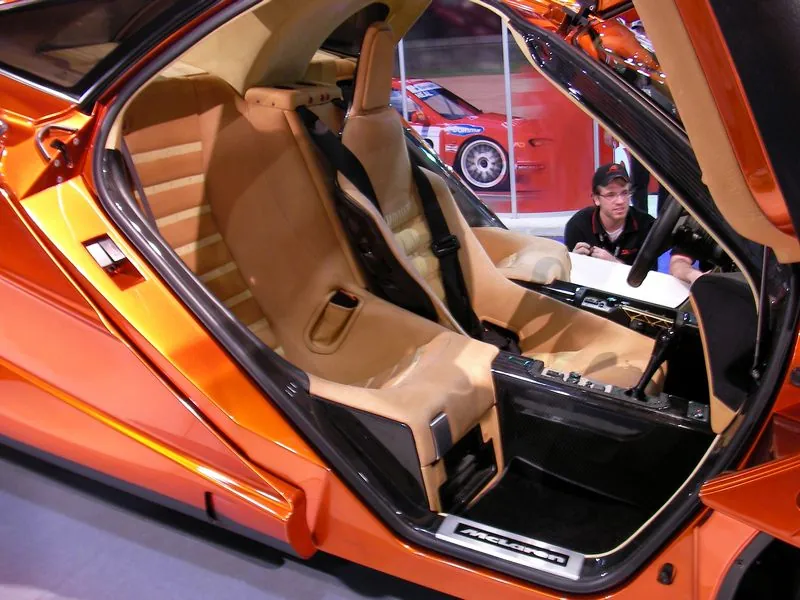
The Gordon Murray Automotive T.50 carries the finest expression of the form: a 3,994 cc naturally aspirated 65-degree V12, developed and built by Cosworth. It produces 663 PS at 11,500 rpm and revs to 12,100 rpm, the highest redline of any naturally aspirated road-car engine ever made. It weighs 178 kg, billed as the lightest V12 ever fitted to a road car, with a titanium valvetrain, gear-driven ancillaries and a 14:1 compression ratio. Throttle response is measured at 28,400 revs per second; the engine goes from idle to redline in 0.3 seconds. Peak torque is 467 Nm at 9,000 rpm, with 71 percent of it available from 2,500 rpm.
The numbers are only half the story. The engineering choices, a 65-degree bank angle for packaging, steel crankshaft weighing just 13 kg, dry sump, no hybrid assistance at all, represent a philosophy: lightness and response over outright output. Production of the 100 road cars finished in July 2025. The track-only T.50s, limited to 25 units, extracts 725 hp with ram-air effect and passed its final production approval test at Bahrain in March 2026. The T.33, using a reworked version of the same V12 with 615 PS and an 11,100 rpm redline, enters production in late 2026.
The precedent for all of this is the Aston Martin Valkyrie, whose Cosworth 6.5-litre V12 makes 1,000 hp at 10,500 rpm and revs to 11,100 rpm, with a KERS-style hybrid system lifting total output to 1,160 hp. The Valkyrie proved there was an audience, and a business case, for an uncompromised engine.
The V16: Bugatti's answer
Bugatti's response to the same question is the Tourbillon's 8.3-litre naturally aspirated V16: 1,000 PS at 9,000 rpm, 900 Nm, a crankshaft nearly a metre long, 14.5:1 compression and an engine weight of 252 kg. Cosworth assisted in its development, and Bruce Wood, Cosworth's powertrain chief, called it the most powerful naturally aspirated engine the company has ever built. It is Bugatti's first production V16 in around eight decades.
The crucial detail is what sits around the engine. Three electric motors contribute 800 PS for a 1,800 PS total, with a 25 kWh 800V battery. The hybrid system does the low-speed work, torque fill and traction, which liberates the combustion engine to be what it is best at: a high-revving, naturally aspirated machine. This is the pattern across the renaissance. Electricity handles the chores; combustion provides the character.
The turbo V8s that rev like race engines
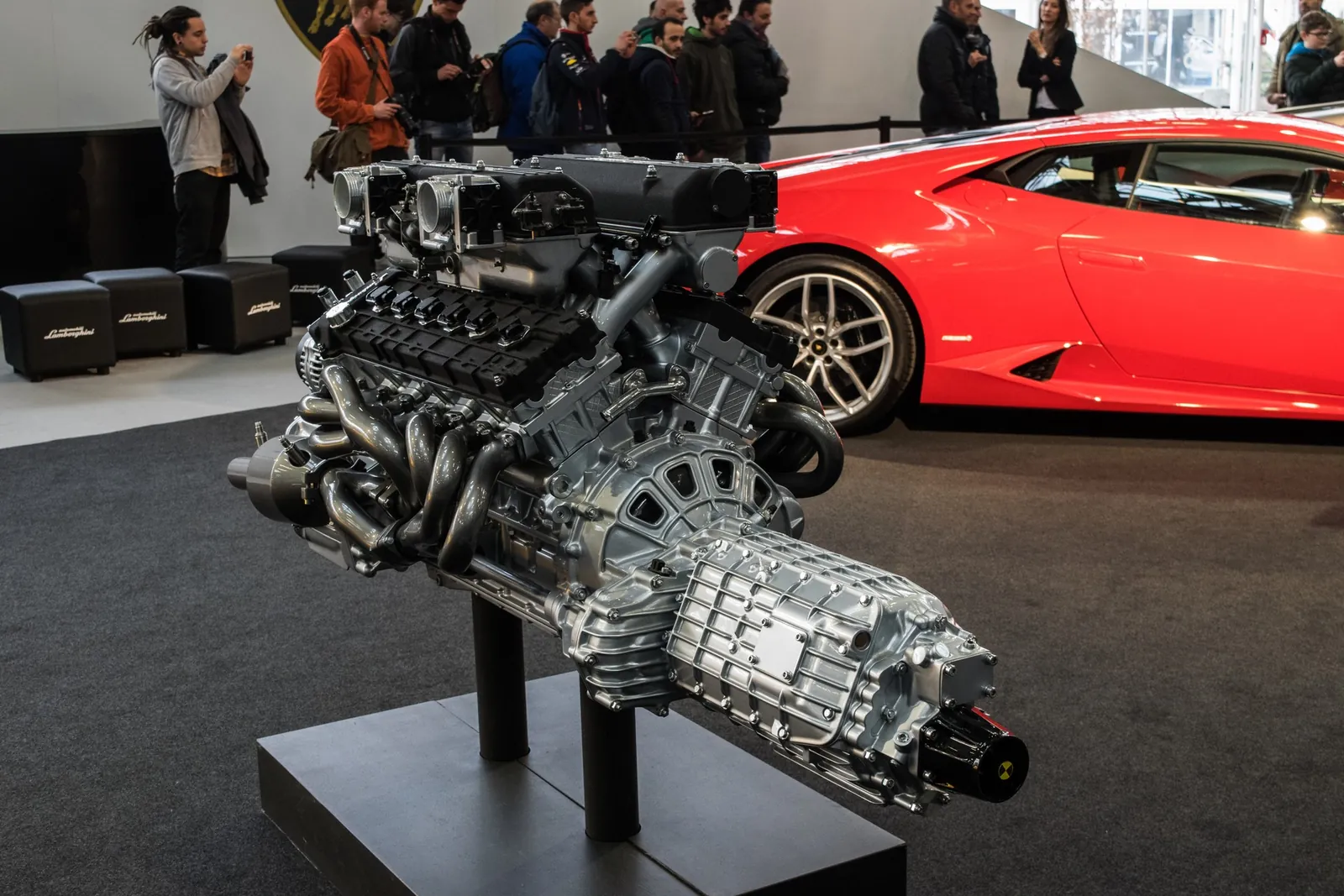
Turbocharging was supposed to kill revs. Two new engines disagree. Lamborghini's Temerario uses an all-new 4.0-litre twin-turbo flat-plane-crank V8, built in-house, making 800 PS between 9,000 and 9,750 rpm with a confirmed 10,000 rpm redline, the first Lamborghini to spin that fast. Titanium connecting rods, finger followers rated beyond 11,000 rpm and twin turbos in the hot vee running up to 2.5 bar of boost deliver nearly 200 hp per litre. With three axial-flux motors, total output is 920 PS.
McLaren's W1 uses the clean-sheet MHP-8 4.0-litre twin-turbo V8, designed with Ricardo and unrelated to McLaren's previous engines: 928 PS, a 9,200 rpm redline (the highest-revving McLaren engine ever), plasma-sprayed bores, dual direct and port injection for Euro 7 compliance, and hollow sodium-filled intake valves. A 342 hp e-module brings the total to 1,258 hp.
These are turbo engines engineered with naturally aspirated values: short strokes, light reciprocating parts, valvetrains built for speed rather than boost tolerance alone.
Why now: the manufacturers have decided
The engineering would mean little without corporate commitment, and in 2025 and 2026 the commitments arrived. Mercedes-Benz confirmed it will keep offering V12s into the 2030s and has nearly finished Euro 7 compliance on a new high-performance V8 (September 2025). BMW confirmed in January 2026 that V8 and V12 engines remain central to its strategy, with M boss Frank van Meel saying the company does not want to give up the combustion engine. Ferrari's 2030 strategic plan reversed its EV-heavy roadmap to a 40 percent combustion, 40 percent hybrid, 20 percent electric mix, pledging to keep innovating its V6, V8 and V12 engines. Aston Martin said in July 2026 that the V12 remains central to its plans, with plug-in hybrids no longer making sense for the brand and full EVs pushed into the 2030s. Rolls-Royce extended its V12 lifecycle into the next decade.
The logic is consistent. Hybridisation, whether a 48V starter-generator or a full plug-in system, absorbs the low-end torque and emissions burden that once forced engines to be compromised. Freed from those duties, the combustion engine can be optimised for what enthusiasts actually value: response, sound and the particular violence of high rpm. A 12,100 rpm redline is not nostalgia. It is what happens when engineers are allowed to chase the thing itself.
There is also a simpler truth. Engines like these are objects of desire in their own right, and desire is a durable market force. The T.50's 100 cars sold out, the T.33's 100 coupes sold within a week, the Tourbillon's 250 are gone. The renaissance is not a stay of execution. It is a second act, built on the realisation that the electric motor and the great engine are not enemies. They are complements, and the combination is producing the finest powertrains in automotive history.