Above the 911, Permanently: What the Mission S Actually Commits Porsche To
Porsche presented the Mission S in New York on 15 October with no engine, no output figure, no price and no launch date. What it announced instead is the significant part: a mid-engined super sports car platform, positioned above the 911, intended to stay in the range for good.
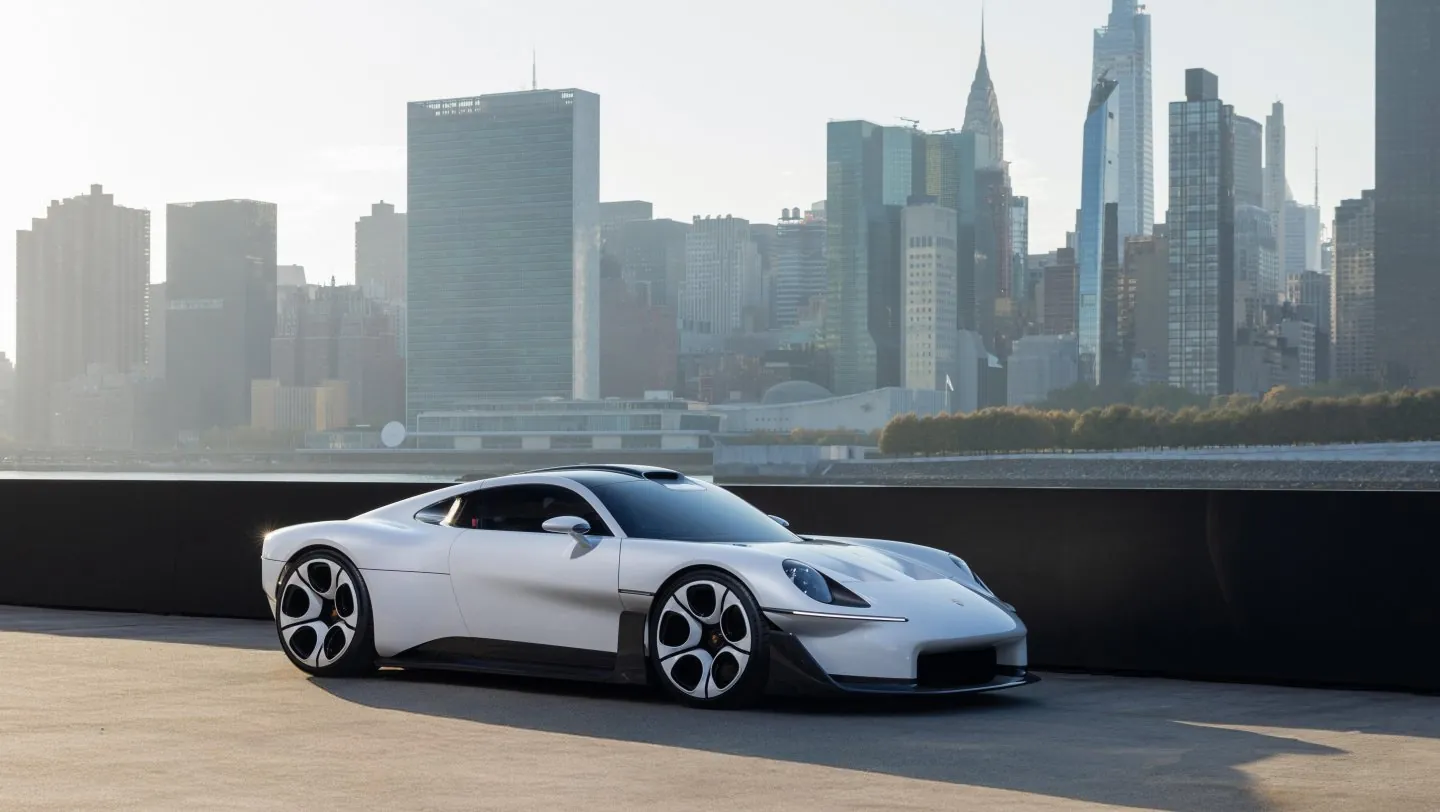
Most concept cars are an answer looking for a question. The Mission S is the reverse. Porsche presented the car on 15 October 2026 on a pier in Queens, New York, in front of the Manhattan skyline, as part of its Sportwagenschmiede 35 strategic realignment. The company calls it a vision model, its term for a show car that previews direction rather than a finished product, and it is explicit that this one previews two things at once: an evolved design identity for the brand, and a new mid-engined super sports car platform that will sit above the 911.
Porsche published no engine, no figure and no date. It published a decision: a permanent tier above the 911.
The commitment is the news
"At the same time, the Mission S represents a mid-engined super sports car platform positioned above the 911, not as a one-off hypercar, but as a permanent and versatile addition to our customer offering," said Dr Michael Leiters, Chairman of the Executive Board of Porsche AG. Porsche's own summary of the programme goes further: above the 911, the company is planning, for the first time, a permanently available super sports car offering, developed with the stated objective of the highest level of engineering excellence and maximum flexibility.
The distinction matters, because Porsche has been here before, briefly. The Carrera GT and the 918 Spyder each put a mid-engined flagship above the 911 for a limited production run, and then the tier closed again. A permanent model line is a different decision. It gives the 911 a ceiling it has never had, it commits the company to a second sports car architecture alongside the rear engined one it has refined for six decades, and it creates a Porsche flagship that a customer can order as a matter of course rather than apply for. That, and not the show car's surfacing, is what 15 October actually decided.
A design written from the archive
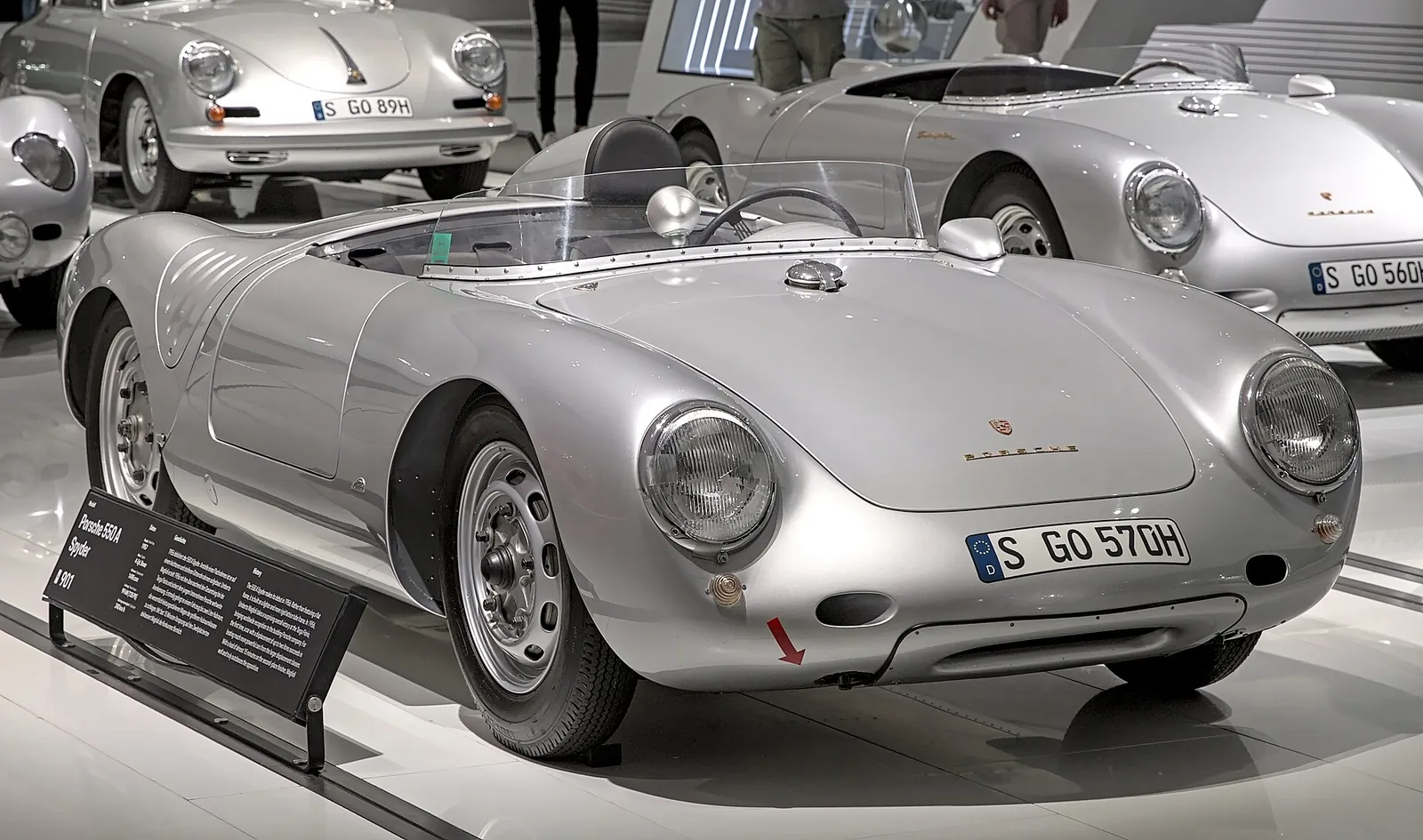
Tobias Sühlmann, Head of Style Porsche, frames the car as the first expression of a design strategy built on three words: authentic, consequent and timeless. "The Mission S is the result of a forward-looking, holistic design strategy," he said. The quotations from the archive are specific, and Porsche lists them itself. The round headlights and the raised torpedo fenders come from the 911. The shut lines that merge into the light graphics quote the G model 911 built from 1974 to 1989. The flat front is taken from the 911 GT1, and the car-in-car treatment of the rear is derived from the same racing car. The roofline, drawn beneath the rear wing to the back of the car, recalls the 959. The cooling solution refers to the radiator fan of the 917, and the wheels rework the dial design of the 928 to a brief of systematic lightweight construction. A single wraparound line connects the front and rear light signatures; the surfaces above it are sculpted to read as muscle, and the technical functions below it are left visible.
Even the colours are archival. The show car wears Firn White Metallic and Light Red Metallic, with Black Chrome detailing and a Special Black interior, a palette Porsche says reinterprets the classic Porsche Motorsport colours of white, grey and red.
The interior deletes the screen
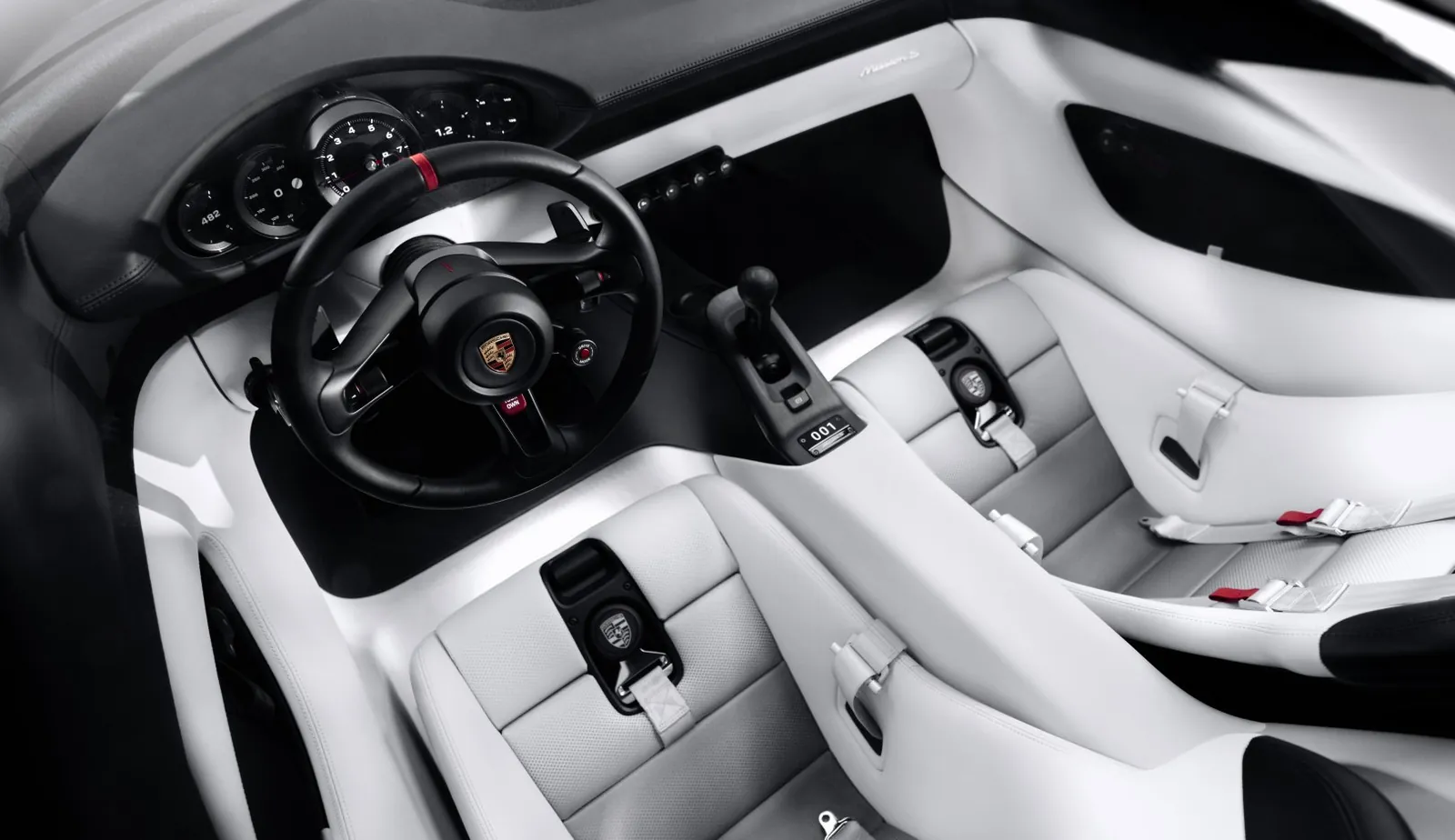
Inside, the argument sharpens. The architecture takes its two defining lines from the 550 Spyder and the 356, running them through the dashboard and doors so that the driver sits deep within the car. The instrument cluster keeps the five tube arrangement, with an analogue tachometer needle at the centre and a display behind it; the tubes rearrange themselves according to the driving mode selected, and the tachometer moves closer to the driver. The holder for the key stays to the left of the steering wheel, as Porsche custom dictates. What is not there is a centre display. Porsche has deliberately omitted a permanently integrated screen, designing instead a retractable holder for a smartphone, which can serve as the navigation and information display when one is wanted. In a decade of sports cars defined by their screens, the most considered statement in the Mission S cabin is an absence.
What Porsche did not say
For everything else, discipline is required, because the release does not contain it. Porsche has published no powertrain, no output, no performance figure, no price and no production date for the car the Mission S previews, and it has not announced the production model's name. Reporting from the reveal fills some of that silence, and it did not initially agree with itself: early accounts described a production car that would be purely combustion powered, while the most detailed later reporting quotes Leiters describing flexibility across pure combustion, hybrid and plug-in hybrid power, with no battery electric version. None of that appears in Porsche's release, and it is recorded here as reported, not as specification. The one pricing indication in the reveal coverage, Leiters telling Bloomberg that the car will cost much more than a 911, is likewise a remark, not a price. The location, at least, was unambiguous. In 1953 the first photographs of the mid-engined 550 Spyder were taken on that same Queens pier and travelled around the world; Porsche describes the 550 as its first super sports car and the car that defined the brand's identity. To stand the Mission S on the same pier is to claim that the new tier is not an experiment. It is a return, made permanent.