Aston Martin Valhalla: Seven Years From Concept to Customer Cars
After delays, engineering setbacks and a tariff scare, Aston Martin's first series-production mid-engined supercar is finally being delivered. The 1,079 PS plug-in hybrid had a long road to production.
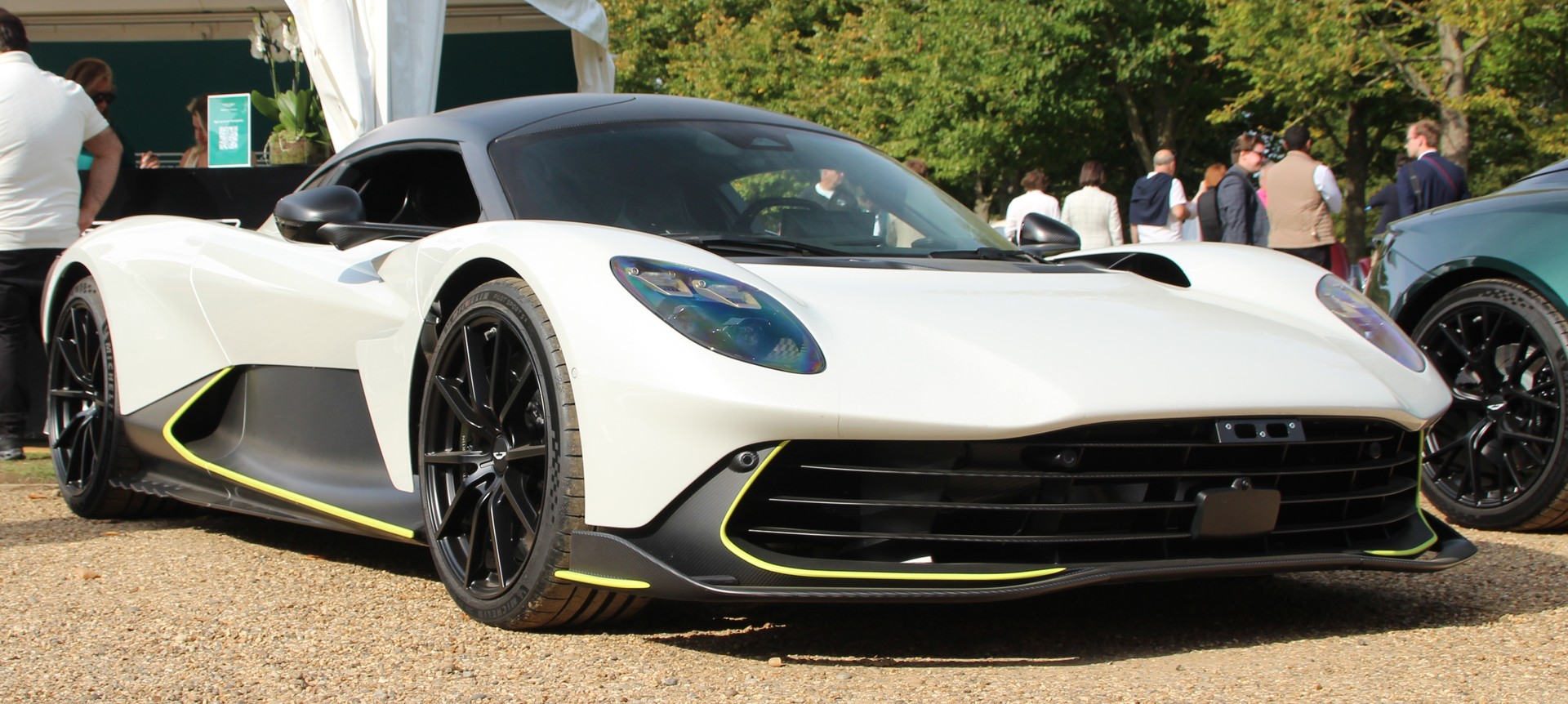
The Valhalla has been a long time coming. First shown as a concept in 2019, re-engineered, re-priced and re-timed several times since, it is Aston Martin's first series-production mid-engined car, its first plug-in hybrid and the most technically ambitious road car the company has built. As of September 2026, customer deliveries are underway, the first media drives are published, and an open-top Spider variant is reported to be coming in November.
It arrived late and over budget in development terms, but it arrived. For a company that has spent a decade promising a mid-engined future, that is the significant fact.
The powertrain
At the Valhalla's core is a bespoke 4.0-litre twin-turbo flat-plane-crank V8, developed from the Mercedes-AMG GT Black Series unit with new camshafts, exhaust manifolds, pistons and a larger compressor wheel. It makes 828 PS on its own, which Aston Martin calls the highest-performing V8 ever fitted to one of its cars. Three electric motors support it: two on the front axle, providing torque vectoring, reverse drive, torque fill and a front-drive electric mode, and one integrated between the engine and an all-new 8-speed dual-clutch transmission with an electronic rear differential.
Combined output is 1,079 PS (1,064 bhp) with 1,100 Nm of torque. A 6.1 kWh battery gives a short pure-electric range, reported around 14 km. Drive modes run from Sport through Sport+ and Race, plus the EV setting. There is no reverse gear in the transmission; the front motors handle reversing.
Aerodynamics and chassis
The carbon-fibre monocoque was co-designed with Aston Martin's Formula One team through Aston Martin Performance Technologies, with aluminium front and rear subframes. Active aerodynamics front and rear include a rear wing that rises 255 mm in Race mode, with DRS and air-brake functions. Downforce exceeds 600 kg, reached at 240 km/h and maintained to the 350 km/h limited top speed by bleeding wing angle to hold aero balance. Claimed dry weight is 1,655 kg; Aston Martin quotes 0-100 km/h in 2.5 seconds.
First drives and deliveries
The first media drives landed around March 2026, with CAR Magazine testing the car on road and track at Circuito Navarra in Spain. Reviewers noted the seven-year gestation, and the sense of a car that had finally arrived rather than one rushed out.
Deliveries were originally targeted for the second quarter of 2025, but engineering and regulatory authorisation delays, compounded by US tariff complications, pushed the first customer handovers to October 2025, as Aston Martin itself recorded. By spring 2026, deliveries were well underway: the company reported more than 220 Valhalla deliveries in the first half of the year, with full-year guidance of around 500 cars. One heavily optioned example appeared at auction in May 2026 with an MSRP of $1,479,700 after more than $360,000 in options. The base price is £850,000 in the UK, with US pricing reported from $1,051,700. Production is capped at 999 units.
The Spider, and what comes next
In September 2026, multiple outlets reported that a Valhalla Spider, expected with a removable targa-style roof and the same 1,064 hp powertrain, could debut as early as November 2026 in even smaller numbers than the coupe. Aston Martin has not confirmed it. If it materialises, it would follow the established supercar playbook: a coupe establishes the engineering, the open car extends the line.
The Valhalla matters beyond its own sales. It is the car on which Aston Martin's claim to mid-engined credibility rests, the bridge between the Valkyrie's excess and the series-production range. It arrived late and over budget in development terms, but it arrived. For a company that has spent a decade promising a mid-engined future, that is the significant fact.


