Torque Fill: How the Lamborghini Temerario's Hybrid V8 Rewrites the Rules
The Huracan's naturally aspirated V10 is gone. In its place: a 4.0-litre twin-turbo V8 that revs to 10,000 rpm and three electric motors that erase turbo lag. The Temerario makes 920 PS, and the electricity is the point.
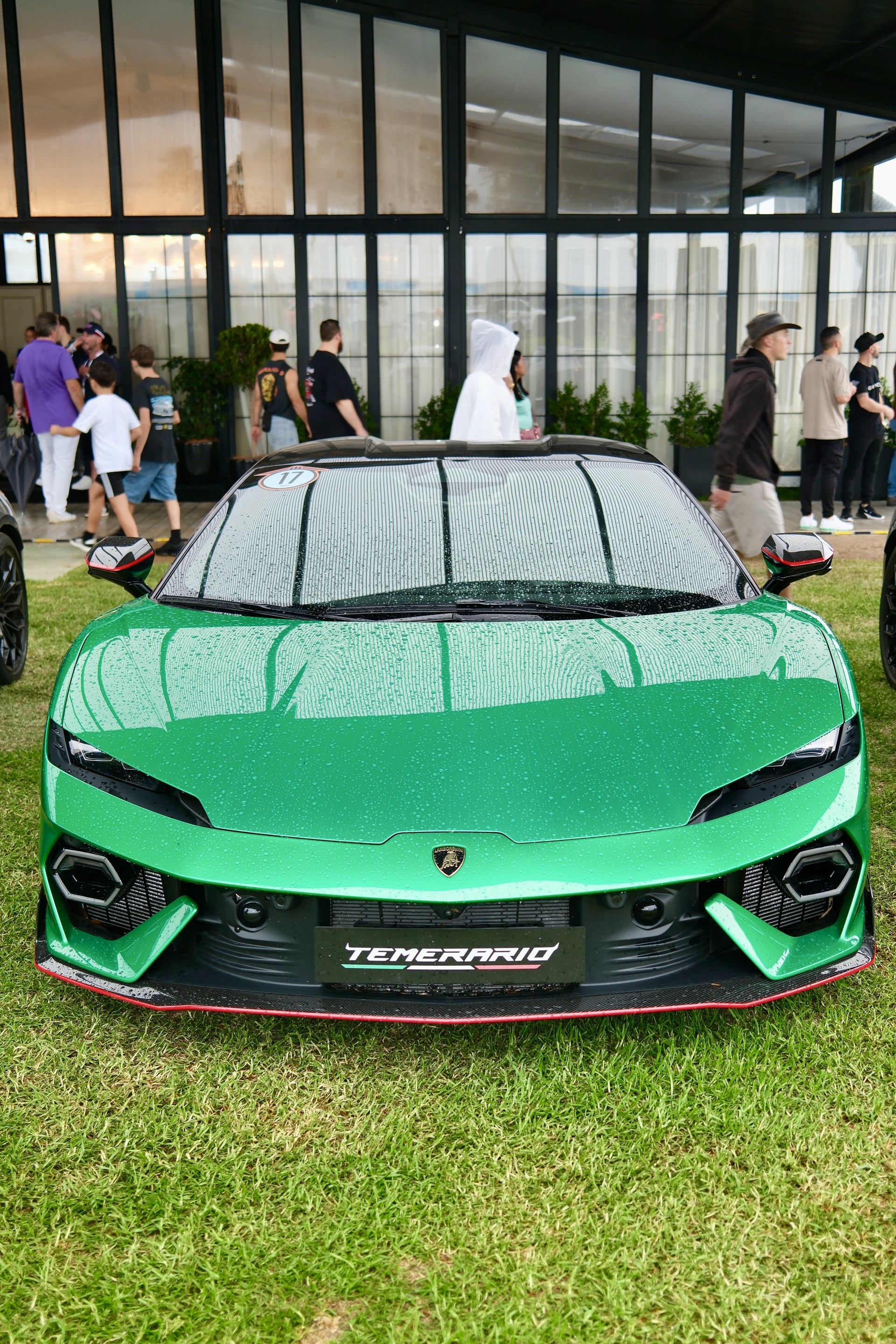
When Lamborghini confirmed the Huracan's replacement would abandon the naturally aspirated V10, the reaction was closer to mourning than curiosity. The 5.2-litre V10 had defined Sant'Agata's junior supercar for a decade. The Temerario, unveiled at Monterey Car Week in August 2024, answers the mourning with engineering: an all-new 4.0-litre twin-turbocharged V8 with a flat-plane crank that revs to 10,000 rpm, assisted by three axial-flux electric motors. Combined output is 920 PS (907 hp). The V10 is gone. Nothing about the performance will be missed.
Turbo lag was the last honest criticism of the turbocharged supercar. The Temerario answers it completely.
The engine: a 10,000 rpm turbo V8
The V8 alone produces 789 hp between 9,000 and 9,750 rpm, with 538 lb-ft of torque. Titanium connecting rods and a flat-plane crank keep rotating mass low enough for the five-figure redline, making it the highest-revving production V8 yet built. It is a clean-sheet design, and Lamborghini presents it as the emotional core of the car rather than a downsized compromise.
The torque fill: electricity as a mechanical tool
The most interesting motor sits between the V8 and the new eight-speed dual-clutch transmission. This axial-flux unit acts as a torque gap filler, delivering instantaneous response below 4,000 rpm where the turbos are still spooling, and smoothing torque delivery between shifts. Two more motors on the front axle provide electric all-wheel drive and torque vectoring. A 3.8 kWh battery in the central tunnel feeds them, rechargeable by plug, by the V8, or by regenerative braking. The hybrid system exists for performance, not economy: Lamborghini quotes 0-100 km/h in 2.7 seconds and a 343 km/h top speed.
The analysis: lag is now a solved problem
Turbo lag was the last honest criticism of the turbocharged supercar. Electric torque fill answers it the way fuel injection answered carburettor flat spots: completely, and in a way that makes the old complaint sound quaint. The Temerario completes Lamborghini's hybridisation, joining the V12 Revuelto and the Urus SE. The brand's entire range is now electrified, and the junior car carries the most sophisticated version of the idea. The V10 era ended. The electric era, at Sant'Agata at least, has learned to rev.


