Ferrari Took the Hybrid Out, and the Point Became Clearer
The 296 Challenge Stradale and the 296 Challenge Evo share an engine, a weight and a philosophy: no electric assistance. The most extreme 296 is the one with the fewest components, and that is a deliberate engineering argument.
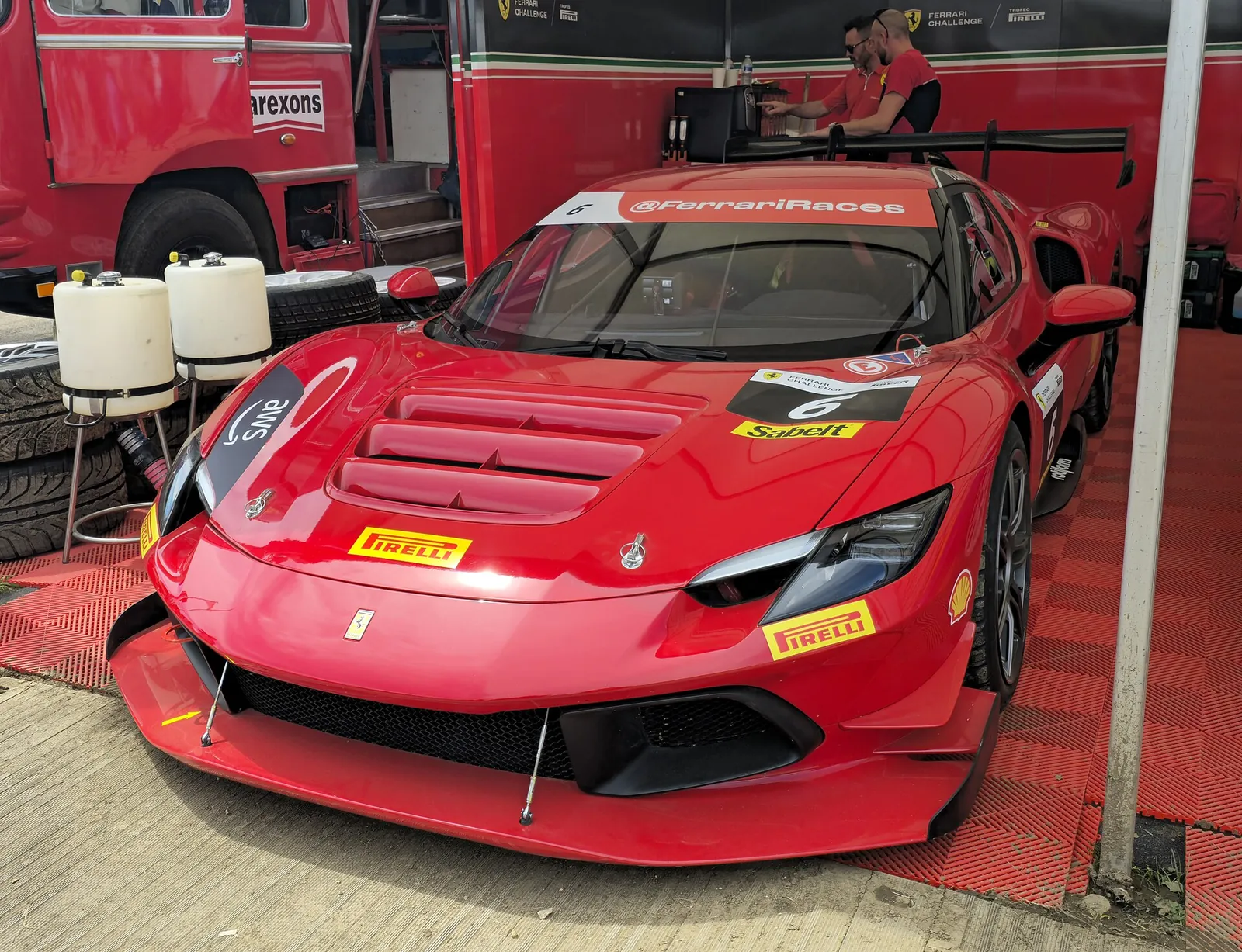
Ferrari chose its own season finale to make the year's most interesting powertrain decision. At the Finali Mondiali gala in Barcelona on Saturday 21 November, the company unveiled two cars developed together: the 296 Challenge Evo, the tenth model in the history of its single marque Challenge series, which races from the 2027 season, and the 296 Challenge Stradale, a road legal car that Ferrari describes as the model in its current range offering the most direct link to a race car. Both are powered by the same engine in the same configuration, and neither has any hybrid assistance at all. In a range built around the hybrid 296 GTB, the fastest members of the family are now the ones without the electric motor.
Subtract the hybrid, spend the savings on aerodynamics and control, and let the V6 carry the car without help.
One engine, two states of tune
The engine is the 2,992 cc twin turbocharged V6 with a 120 degree vee angle and no electric assistance at all, the purely petrol layout Ferrari first gave the 296 Speciale. In the Stradale it produces 670 hp at 8,000 rpm and drives the rear wheels through an eight speed dual clutch transmission. In the Evo it produces 700 hp at 7,500 rpm, a specific output of 234 hp per litre, with a seven speed transmission. Both cars record the same dry weight, 1,330 kg, which for the Stradale is a full 140 kg less than the 296 GTB, giving a weight to power ratio of 1.98 kg per hp. Ferrari's reasoning is stated plainly in its launch material: leaving the hybrid hardware out keeps mass and complication down, and the line from the driver's right foot through the engine to the rear wheels stays direct. That is not nostalgia. It is a packaging decision. The hybrid system of the GTB buys response and efficiency across a wide operating range; a car intended to run at full load on a circuit, repeatedly, gains more from mass removed than from torque filled in.
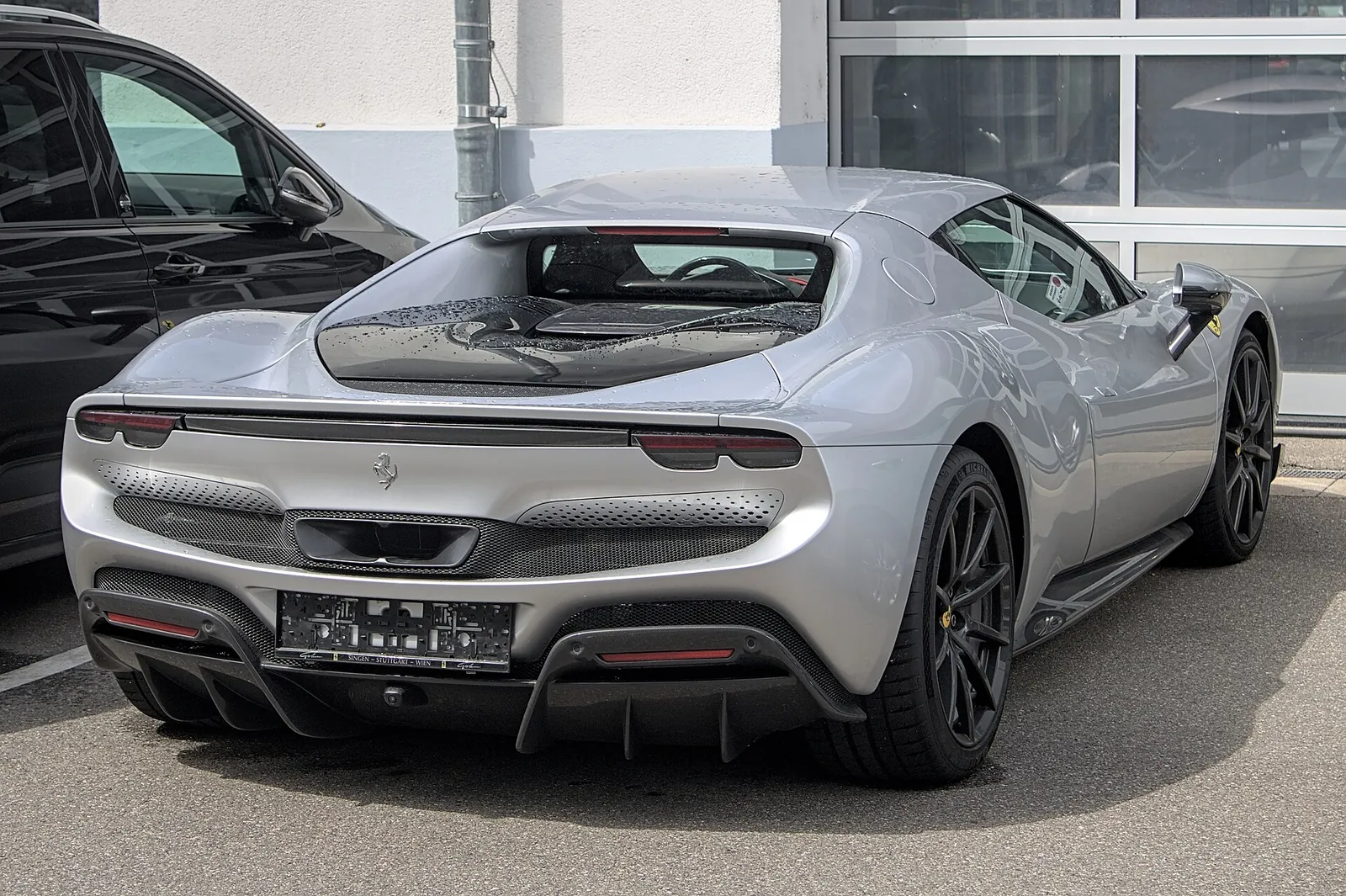
Aerodynamics is where the two cars most visibly share their development. The Stradale generates downforce of 617 kg at 250 km/h, up 72 percent on the 296 GTB, drawn from a fixed rear wing and front splitter, flicks at the corners, an aero damper, vortex generators and an underbody that is enclosed in full. The Evo raises peak downforce by 12 percent over the current 296 Challenge, worth roughly 100 kg extra at 250 km/h, and adds a Low Drag configuration that reduces minimum drag by 4 percent; Ferrari notes that the difference in load between its High Downforce and Low Drag setups has more than doubled, and that raising the rear ride height by up to 10 mm adds approximately 30 kg of downforce at 250 km/h. In comparative testing the Evo was 0.8 seconds faster at Mugello than the car it replaces. Numbers of that kind are the real specification of a Challenge car: not peak output, but a wider window in which a non professional driver can use it, lap after lap.
Control systems, not theatre
The electronics follow the same brief. The Stradale carries ABS Evo in all driving conditions and every Manettino setting, with dedicated control systems and Pirelli P Zero R and P Zero Trofeo RS tyres. On the Evo, the traction control and electronic differential strategies are revised for braking stability and agility in high speed corners, and the brake pedal gains a new curve intended to improve modulation, and a redesigned instrument cluster that puts control intervention levels, tyre pressure data and lap times in front of the driver more legibly. This matters because of what the Challenge becomes in 2027: the series gains 40 minute Endurance races at three rounds, the first of them at Mugello, the season's second event. A car built for longer stints has to manage tyres and brakes as carefully as it manages power, and Ferrari states that reduced tyre degradation over race distance was a design target for the Evo, not a hope.
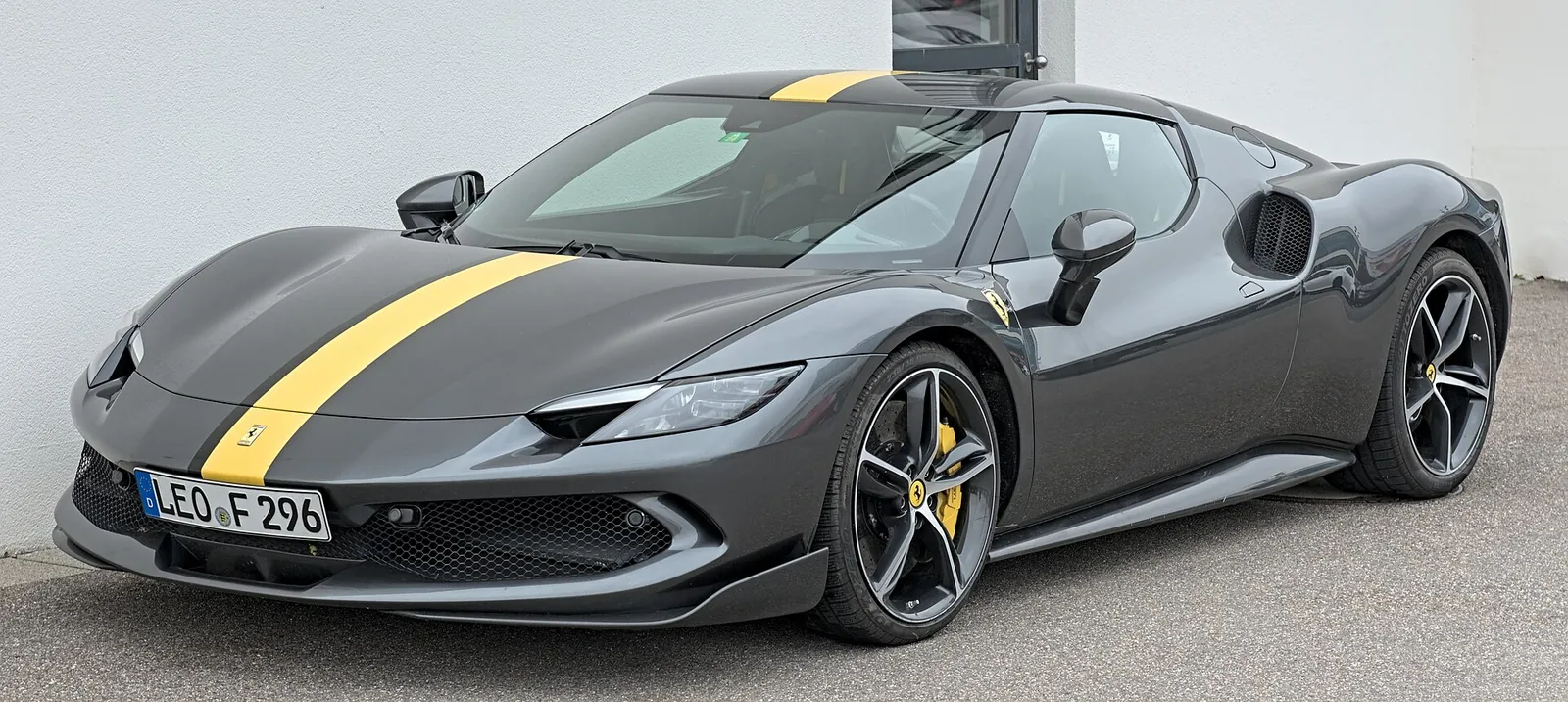
The Stradale's design language makes the same argument visually: surfaces stripped of superfluous elements, technical functions left apparent, the road car deliberately kept close to the racer it is derived from. Ferrari calls the setup almost clinical. The significance of the pair is the direction of travel they reverse. For a decade, the story of the high performance road car has been addition: more systems, more assistance, more mass managed by more software. The 296 Challenge Stradale is Ferrari's counter argument, built from its own racing programme rather than from a concept stand: subtract the hybrid, spend the savings on aerodynamics and control, and let a 670 hp V6 carry a 1,330 kg car without help. Whether buyers prefer it to the hybrid GTB is a market question. As an engineering statement, it is the clearest one Maranello has made this year.