The A310 Vision Is Not a Car. It Is a Platform Wearing a Memory.
At the Paris Motor Show on 12 October, Alpine showed a one-off concept that revives the 1971 A310: 4.55 metres long, 2.03 metres wide, 1.18 metres tall, and explicitly not a production announcement. What it announces instead is the flexibility of the APP platform that will carry the electric A110.
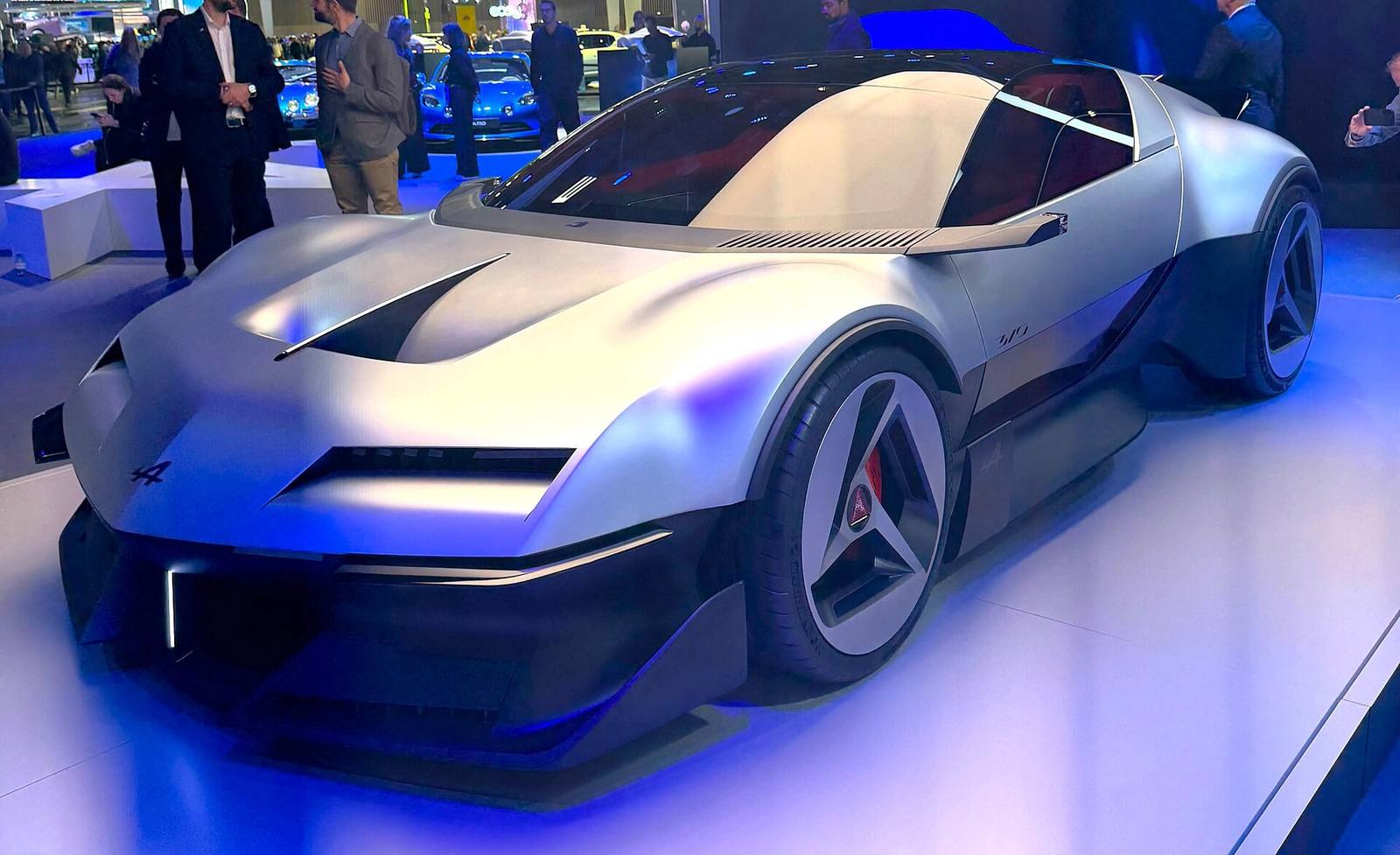
The most honest concept car at the Paris Motor Show was the one that told you, in writing, not to expect it. Alpine revealed the A310 Vision on 12 October 2026 and described it as an independent design concept, a creative exploration of the brand's heritage rather than the announcement of a future production model. Design director Antony Villain was reported by Particle News as saying a production version was not planned, while framing the car as a possible reference for a limited series project. Hold those two facts together and the car makes sense: the A310 Vision is not a preview of a product. It is a demonstration of what the platform underneath it can be made to wear.
The shape is not the news. The news is that the platform can stretch to 2.03 metres wide, stay 1.18 metres tall, and still be recognisably an Alpine.
The numbers first
The concept measures 4.55 metres in length, 2.03 metres in maximum width at the rear, and just 1.18 metres in height, on a wheelbase of 2.45 metres. Set against the 1971 original it revives, InsideEVs calculates that the Vision is 37 centimetres longer and 39 centimetres wider, yet only 3 centimetres taller. That proportion, dramatically wider and barely taller, is the electric era in a single comparison. A battery platform does not force a car upward if the packs are arranged around the occupants rather than under them, and Alpine says exactly that about this car: two battery packs, split to keep the silhouette low and the driving position where a sports car needs it.
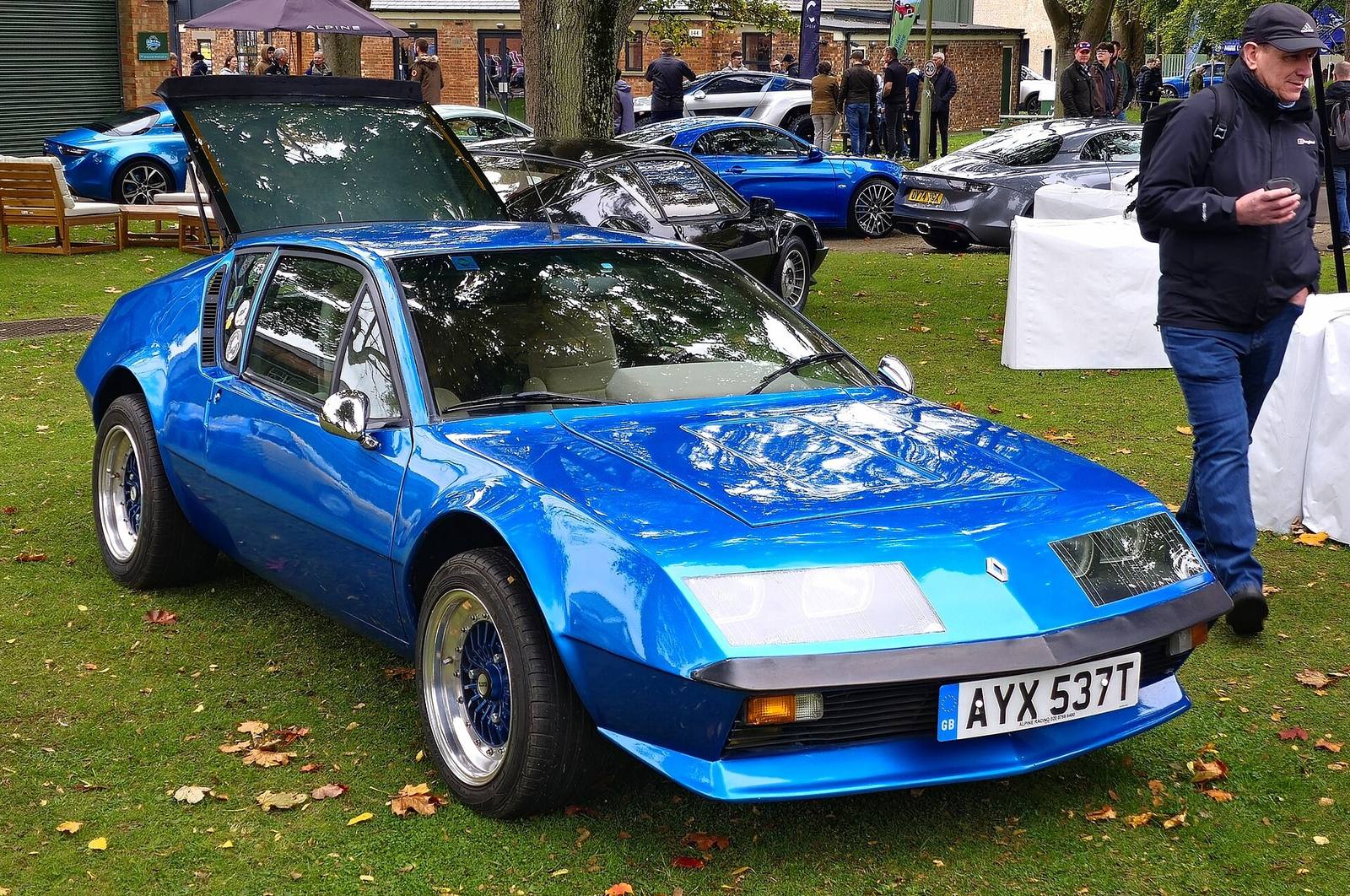
The occasion is a double anniversary. The four-cylinder A310 was launched in 1971, fifty-five years ago; the better known V6 arrived in 1976, fifty years ago. Alpine sold more A310s between 1971 and 1984 than it ever sold of the original A110, a fact the brand's own heritage telling tends to mention quietly. The Vision mixes both eras of the car: the slim, sharp lines of the early four-cylinder cars and the flared arches of the V6.
Details that do work
Concept cars usually ask to be admired. This one asks to be read. The headlights perform a pop-down effect, hidden in the pointed bonnet line until the car starts, a legal and witty answer to the original's era of pop-up lamps. A blade Alpine calls Y Zero runs down the centre of the car, dividing the bonnet's air duct. The rear lights are blade-shaped and, Alpine says, do aerodynamic work as well as lighting work. The two-part rear wing, the tiered diffuser inspired by Formula 1, the exposed rear wheels, the black lower body section against aluminium upper bodywork, the A-shaped wheels that nod to the solid metal wheels of the early cars: each device is doing a job, or at least plausibly claiming to. Inside, the cabin uses organically shaped seats, strong colour blocking and physical controls inspired by hi-fi equipment, a deliberate refusal of the all-touchscreen default. The doors are partly transparent, the mirrors are cameras, and the canopy is a semi-transparent bubble. It is theatre, but theatre with an engineering vocabulary.
The platform is the product
Underneath sits the Alpine Performance Platform, APP, the 800-volt architecture that will first underpin the third-generation electric A110, a car also previewed at Paris in early form as the A110 Sculpture. Reporting from InsideEVs describes an aluminium structure using bonding and riveting, two electric motors on the rear axle, active torque vectoring that adjusts their output every 10 milliseconds, and a target weight distribution of 40:60 front to rear. Alpine gives no power figure for the Vision, which is precisely the point: the concept is not selling a specification. Particle News reports that the platform is designed to accept different widths, wheelbases and layouts, and can even accommodate a combustion driveline for low-volume specials. That last detail, if it survives contact with the production planners, is the most Alpine sentence in the whole story: an electric platform with a documented escape hatch for the cars that should not be electric.
The analysis: heritage as a stress test
Every heritage concept is an argument about what a brand is allowed to become. Alpine's argument is unusually disciplined. Rather than sketching a fantasy and letting the public assume a product, the company built the most nostalgic shape in its back catalogue on top of its newest architecture, and then said, plainly, that the shape is not the news. The news is that APP can stretch to 2.03 metres wide and stay 1.18 metres tall, can put its batteries in two places instead of one, and can carry a 2+2 grand tourer's proportions as readily as a compact berlinette's. If the electric A110 is the platform's examination, the A310 Vision is Alpine showing its working. Whether a limited series follows is a question for the order books. As a design statement, the car has already done its job: it proves the future at Dieppe will be recognisable, not because it copies 1971, but because it was designed by people who measured it.