
The Tesla Roadster, Revealed at Last: A Halo Car That Leaves the Ground
Nine years after the concept, Tesla showed the redesigned Roadster in Waco, Texas: a white, angular wedge that drove up an inverted ramp, turned in mid-air, and lifted itself over five stablemates. Production is promised for 2028. The price is still a secret.
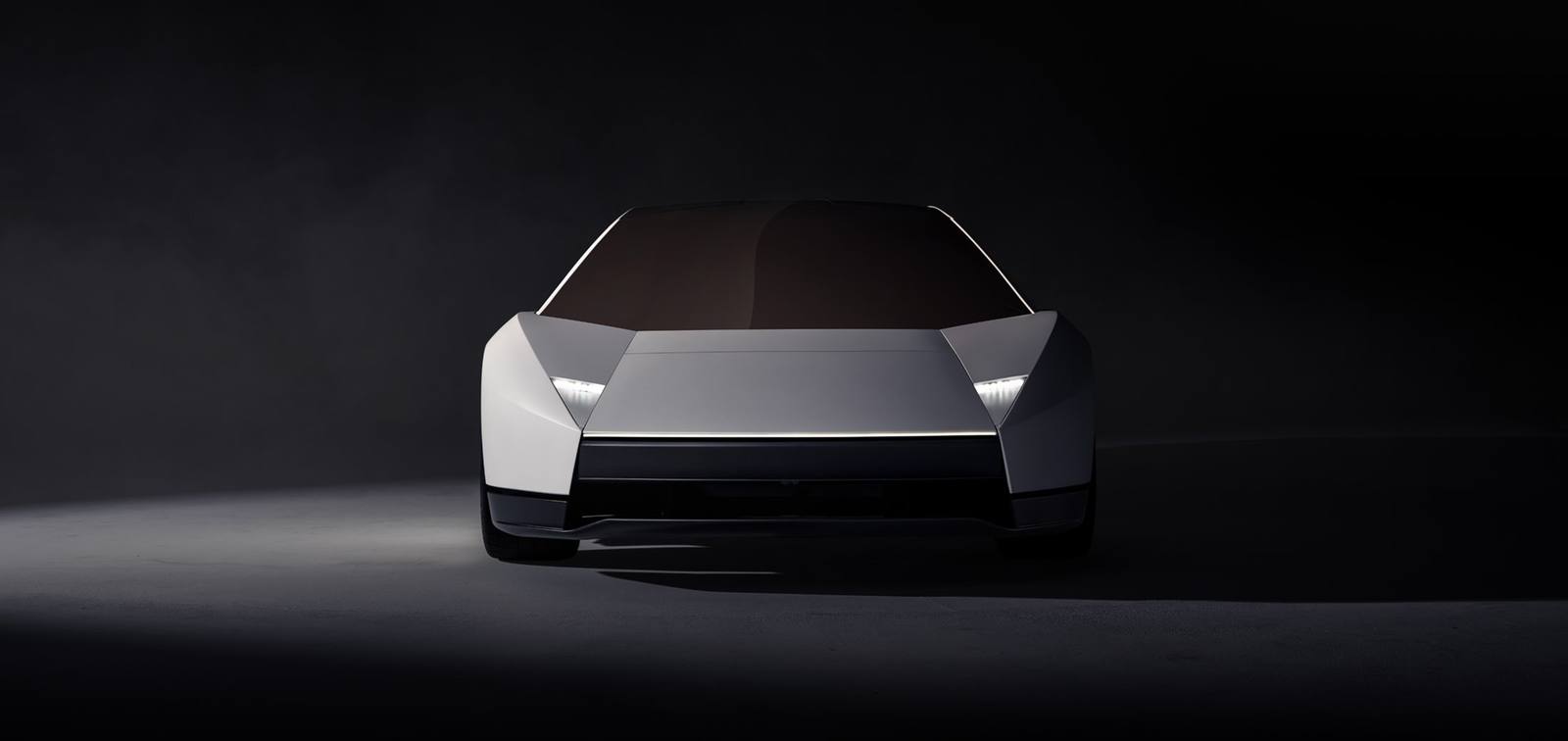
For nine years the Roadster was a promise. In Waco it became a demonstration, and a demonstration is not a delivery. That distinction is where any honest account of Thursday night has to start, because what Tesla staged outdoors in Texas, and streamed live, was the most theatrical product demonstration the car industry has produced in years: a white, angular sports car that drove up an inverted ramp on a mixture of fans and rocket thrusters, turned around in mid-air, settled back onto the pavement, and then used the same thrusters to lift itself clean over a Cybercab, a Cybertruck, a Semi, a Model Y and a Model 3 while in motion.
For nine years the Roadster was a promise. In Waco it became a demonstration, and a demonstration is not a delivery.
Elon Musk, who has called the car the last best driver's car, told the audience this was the production design. "This will be the actual car that's on the roads," he said. Tesla will build it from 2028, he added. He did not name a price.
What the demonstration actually showed
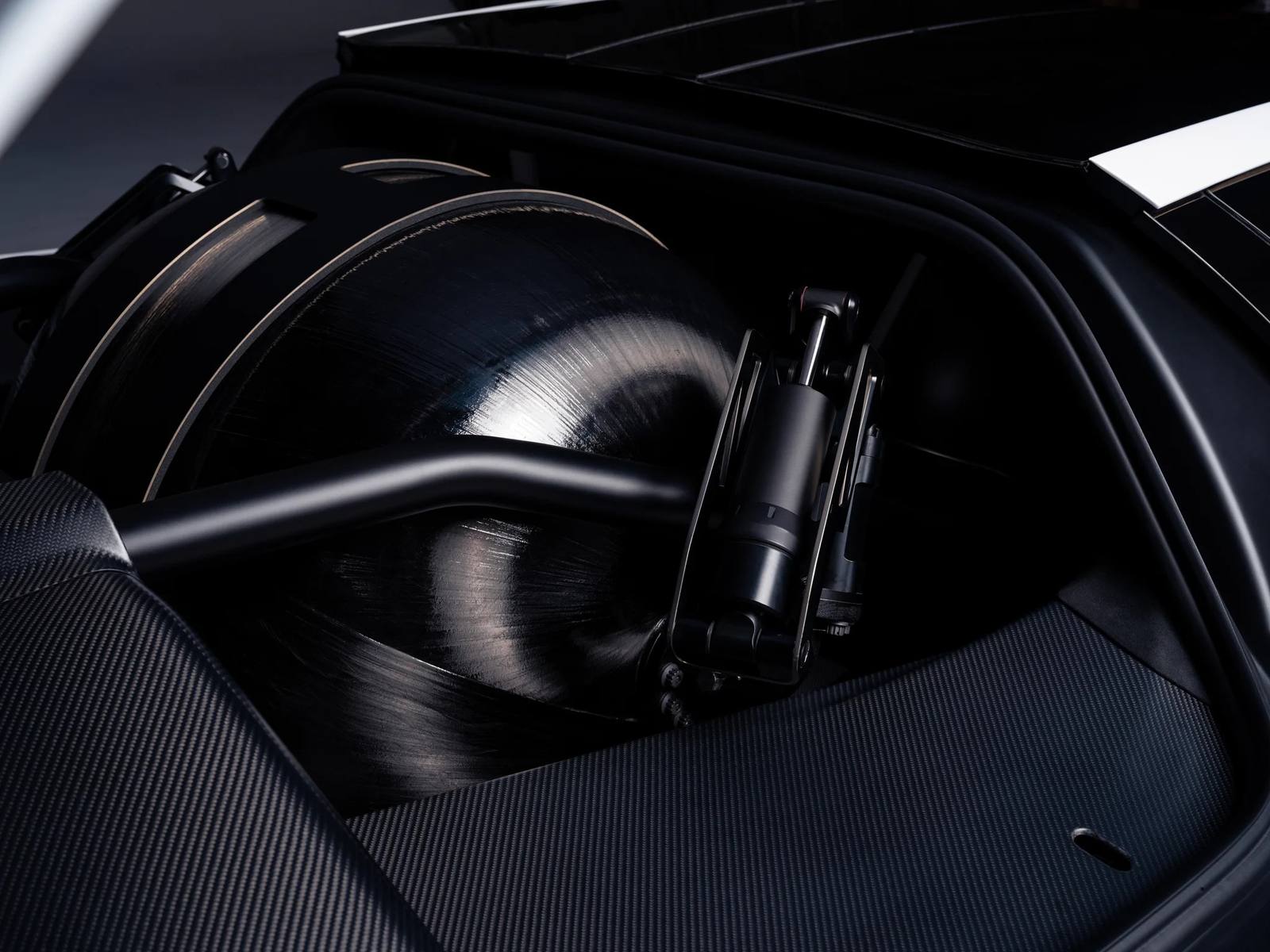
Strip away the showmanship and the engineering underneath is specific. Lars Moravy, Tesla's engineering vice president, said the car carries ten thruster nozzles fed by 600 litres of compressed air, and that the tank can be recharged. Tesla added, in a post during the event, that every usable void in the car is packed with carbon fibre overwrapped pressure vessels, the COPV hardware SpaceX uses for pressurised gas. The fans are the second half of the system: they work on the air under the car, sucking it toward the surface, the same principle the McMurtry Spéirling uses to generate downforce at a standstill. Between them, the two systems let the car press itself up a ramp that ends upside down, and push itself off the ground altogether.
Tesla also showed the car reaching 60 mph in one second. That figure, like everything else about the evening, arrived as a demonstration rather than a measurement: Tesla published the car's first specification claims on the night, three trims with 300 miles of range and a top speed above 230 mph, but no independent timing was possible, and the claims made from the stage should be read as claims until someone outside Tesla can measure the car.
The design: a wedge, not a curve
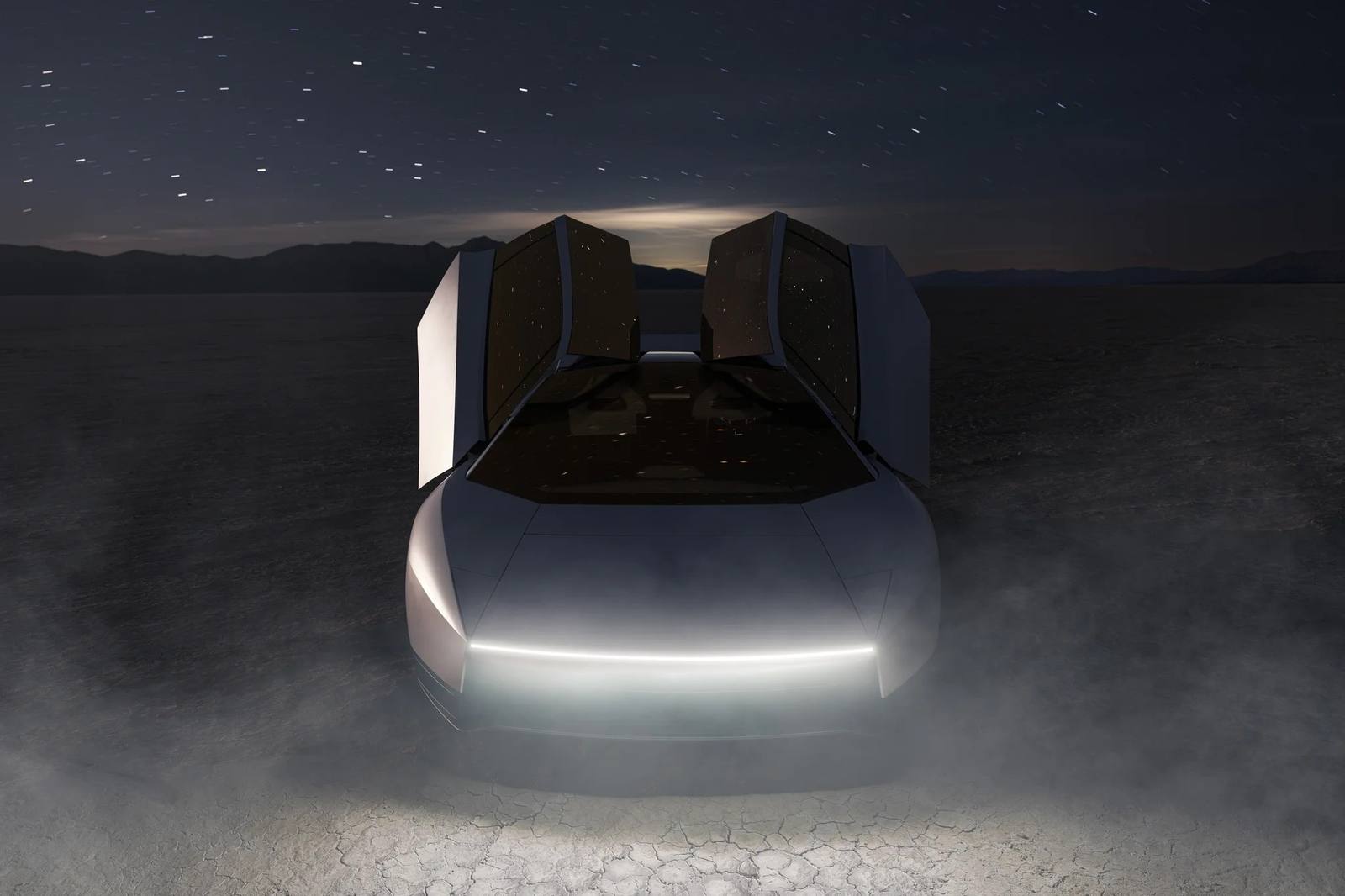
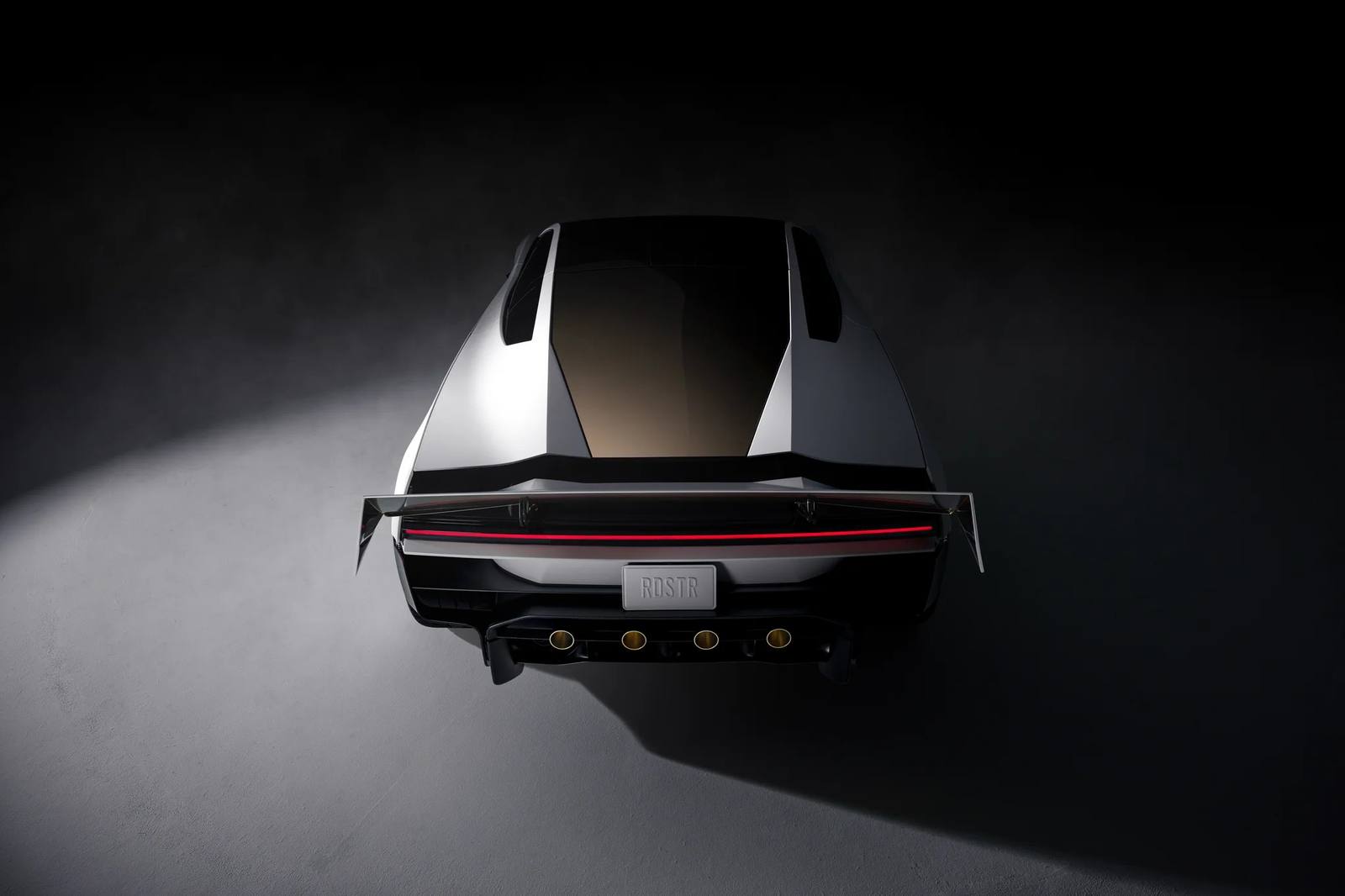
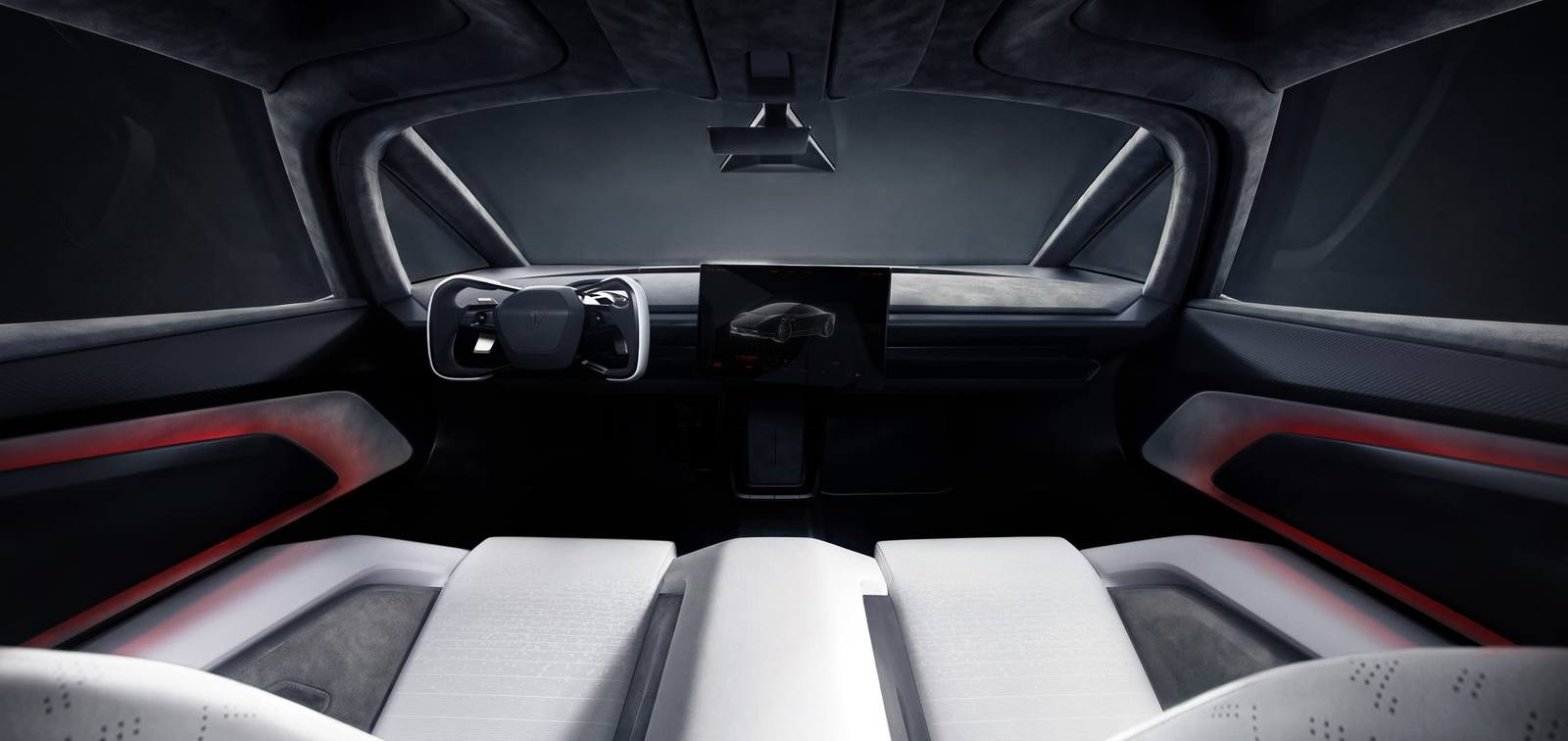
The 2017 Roadster was a smooth, conventional beauty. The 2026 car is a creased white wedge that looks, as more than one observer noted on the night, closer to a Lamborghini, or to the Lotus Esprit from The Spy Who Loved Me. The reference is not accidental: Musk owns that Esprit, and it was on display at the event. Tesla says the design was inspired by the SR-71 Blackbird and the F-35 fighter, and describes its design language as having evolved from the S3XY cars to the Cybertruck generation. The doors rise as gullwings. There is a full-width light bar at each end, and beneath the rear one sits the row of nozzles that does the evening's work.
Nine years of context
The car was first shown in November 2017, rolled out of a Semi trailer to claims of 0 to 60 mph in 1.9 seconds, a top speed above 250 mph and 620 miles of range, at $200,000, or $250,000 for one of 1,000 Founders Series cars. Deliveries were promised for 2020. Musk pushed the date back in 2020, again in 2021, and again in 2023 and 2024. At last November's shareholder meeting Musk set a demonstration for April 1, 2026, and joked that the date gave him deniability. April passed. October 1 was set, then abandoned on September 28 when severe weather threatened an event that can only be held outdoors. Reservation holders, who paid $50,000 deposits, have now been waiting through all of it; Marques Brownlee cancelled one of his two reservations, and Sam Altman has said he cancelled his.
Brownlee's response to Thursday night, posted within the hour, read the stage claims back as a list (a car of more than 4,000 pounds that can flip, run at 380 mph, and ship in 2028) and asked whether it was a prank. It is a fair summary of the scepticism Tesla has earned. Musk himself has said, earlier this year, that safety is not the main goal with this car, comparing it to buying a Ferrari. Nothing about Thursday night was aimed at reassuring anyone.
What remains unproven
Three things decide whether the Roadster matters beyond one October night. The first is verification: a one-second launch and a mid-air turn are extraordinary claims, and extraordinary claims need instruments, not livestreams. The second is production: 2028 is a date Tesla has approached before from the other side, and the company gave no price and no production volume on the night. The third is whether the thruster car is the car. The demonstration machine jumped and spun on stored compressed air, a finite resource measured in seconds; what a customer drives home, and how much of the theatre survives contact with regulators, is a question Thursday did not answer.
None of that diminishes the demonstration itself, which was real, live, and unlike anything a car company has attempted in public. Musk also floated a jump over the Snake River Canyon, where Evel Knievel failed in a steam rocket in 1974. It was the perfect line for the night, and for the Roadster's whole nine-year story: the spectacle is guaranteed, the delivery is the part still to be believed. Our live coverage page carries the full official stream replay.


