
Type 01: The Car Jaguar Had to Build
Unveiled in New York on 6 October, the Type 01 is Jaguar's first production car of its reinvention era: a 1,030 PS electric four-door GT on a dedicated architecture, priced from 130,000 GBP. The specification sheet is the real news, because it means the rebrand will now be argued on engineering terms.
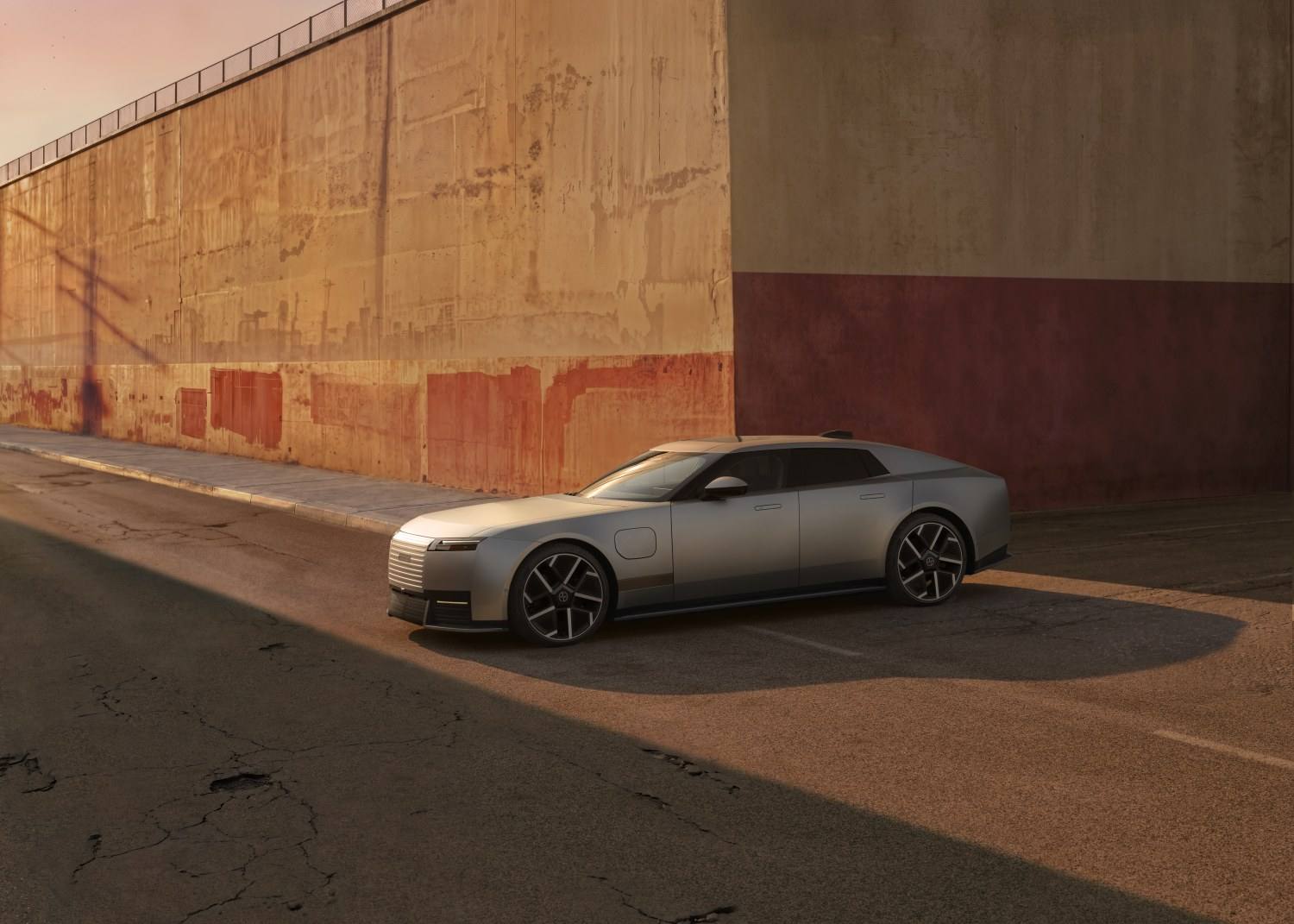
On the evening of 6 October 2026, in a converted West Chelsea venue called STORIED, Jaguar showed the world a car it actually intends to sell. That has not happened for some time. The Type 01 is a luxury four-door electric grand tourer, the first production car of the company's reinvention era and the first to ride on its dedicated Jaguar Electric Architecture. It arrived dynamically, driven through closed West Side streets by António Félix da Costa of the championship-winning Jaguar TCS Racing team, after a day of digital takeovers across Times Square, DUMBO and the Lower East Side. Orders open in early 2027, first client deliveries are expected in the second half of that year, and prices start at 130,000 GBP.
The long bonnet is absurd on paper and the most honest thing about the car: it says the designers were allowed to want something, and the engineers were asked to make it work.
The context is unavoidable. Jaguar stopped selling new cars in 2025 and spent the intervening year being argued about: the Type 00 concept of December 2024, the Copy Nothing rebrand, a public dispute about what the marque was for. The Type 01 is the answer, or the first instalment of one. Three electric motors, more than 1,000 PS, a claimed 400-mile EPA range: the specification sheet is a deliberate statement that the reinvention will be contested on engineering terms as well as aesthetic ones.
The engineering, in figures
Jaguar quotes 1,030 PS and 1,365 Nm from the tri-motor powertrain, with Intelligent Torque Vectoring managing the distribution between the axles, a 50:50 weight balance, and two selectable dynamic characters that shift the car between comfort and response. The benchmark figures: 0 to 62 mph in 3.2 seconds, 62 to 112 mph in 4.0 seconds. The electrical architecture runs at 850 volts; usable battery capacity is 118 kWh. Jaguar's own range claims are up to 400 miles on the EPA cycle and up to 450 miles, or 720 km, on WLTP, with 200 miles added in 13 minutes at up to 350 kW, though the company notes final figures remain subject to homologation. The aerodynamic work is quantified too: a drag coefficient of 0.23, achieved with active vanes and a three-stage deployable spoiler. Jaguar has filed more than 360 patent applications on the car.
The name is positioning on its own. Jaguar says Type nods to the lineage of the E-type and XJS, 0 signifies zero tailpipe emissions, and 1 marks the first of a new generation. The car is designed, engineered and built in the UK, and JLR says work on the production lines is already well advanced.
The bonnet that did not have to exist
The design story starts with a decision that is almost a provocation: the Type 01 has a long bonnet. There is no engine under it. The designers kept it anyway, because a Jaguar grand tourer, in their reading, has a long bonnet the way a sonnet has fourteen lines. Around it: a low roofline, a short front overhang, an extended rear overhang, 23-inch wheels, and the Strikethrough graphic language carried over from the Type 00 concept. There is no rear windscreen; a ClearSight camera system takes its place. The silhouette reads as a single line from nose to tail, and Jaguar's claim is that the proportions were drawn first and the engineering made to fit them, rather than the reverse.
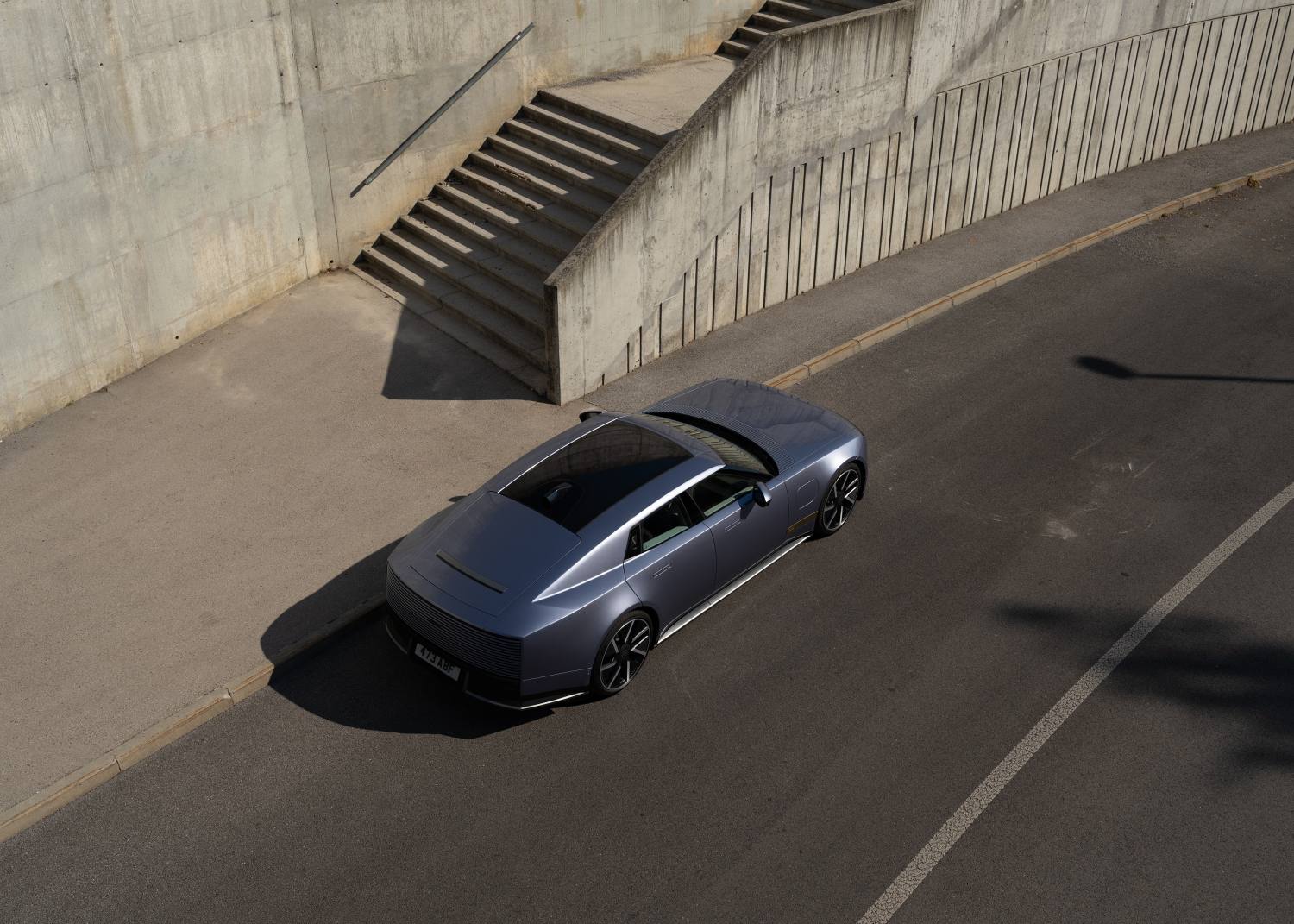
The interior, pre-revealed in August, continues the material argument. A full-length central spine finished in brass and brass-effect anodised aluminium divides the cabin into four individual spaces, with materials described as inspired by travertine stone and artisan textiles. The technology is deliberately restrained: a 24-inch OLED screen, a 7-inch smartphone-style touchscreen, and a panoramic soundbar with an embedded ClearSight rear-view display.
The theatre
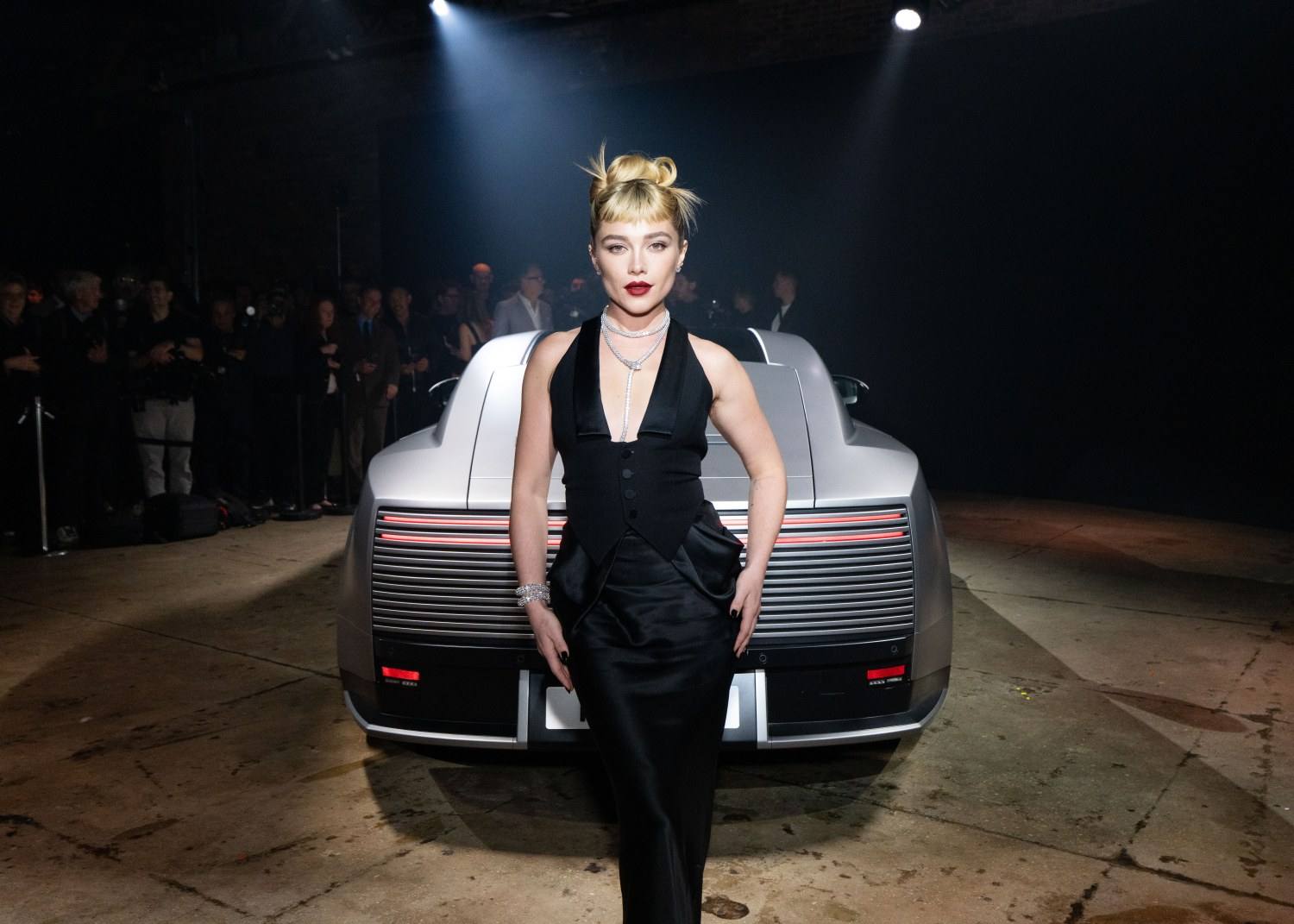
Jaguar did not unveil the Type 01 the way car companies usually unveil cars. The launch named actor Florence Pugh as the brand's inaugural ambassador for the new era, featured a performance by singer-songwriter Sienna Spiro, and included a culinary programme conceived by chef Roze Traoré. This is the Copy Nothing playbook carried into the product era: the car presented as a cultural object first, a machine second. There is a risk in that order of operations, and Jaguar's critics will have noticed it. But the specification sheet now exists alongside the theatre, which changes the argument from whether Jaguar has a product to whether the product justifies the staging.
The analysis: does the substance redeem the reinvention
The honest question is whether 130,000 GBP for a 1,000-plus-PS electric four-door is a credible Jaguar proposition or a leap of faith. The money buys entry to a fight the company chose deliberately. The Taycan Turbo GT sets the performance benchmark for the genre, and Ferrari's first electric car, the Luce, is working toward deliveries on a similar timeline. Jaguar is not undercutting anyone. It is asking to be taken at the same table, on the strength of an 850-volt architecture, tri-motor torque vectoring and a 0.23 drag coefficient. Those are not marketing claims; they are engineering choices that show up in range, charging speed and high-speed stability. The 400-mile EPA figure, if it holds in the real world, removes the standard objection to a grand tourer that cannot grand-tour.
And then there is the bonnet, absurd on paper and the most honest thing about the car. It says the designers were allowed to want something, and the engineers were asked to make it work. That is a healthier sign than any power figure: it suggests a company designing from conviction rather than from a spreadsheet of segment requirements.
The counter-case is the calendar. Orders open in early 2027 and deliveries follow in the second half of the year, which gives the market a long time to watch and rivals a long time to move. The rebrand controversy of 2024 has not been forgotten, and a car that arrives wearing fashion-week credentials will be judged on whether the driving matches the staging. Jaguar's managing director Rawdon Glover called the Type 01 the foundation of the brand, making no compromise between design and engineering in its quest to create objects of desire, just as it was in the days of the E-type and XJS. That is the claim the car now has to prove.


